
Own a 2013 to 2018 Toyota RAV4? Then you’ll want to hear this. There’s a major recall out right now, nearly 1.9 million RAV4s in the U.S., because of a fire risk tied to something as basic as the 12-volt battery. Not the hybrid system. Not the high-voltage gear. Just the everyday starter battery under your hood.
Here’s what’s going wrong: if the battery’s the wrong size, or just doesn’t sit tight, it can slide around, slam into the hold-down clamp, and arc straight to metal. That can short the system. And when that happens, things get hot fast. Fires have already been reported.
Toyota isn’t saying park your SUV or stop driving it. But they are replacing parts for free, and if you’ve already spent money fixing battery issues, a class action deal may pay you back.
So here’s what this guide covers:
Is your RAV4 on the list? Can you still drive it? How long will you wait for parts? And what should you say at the dealership to actually get it done?
Let’s break it all down. No panic. Just facts.
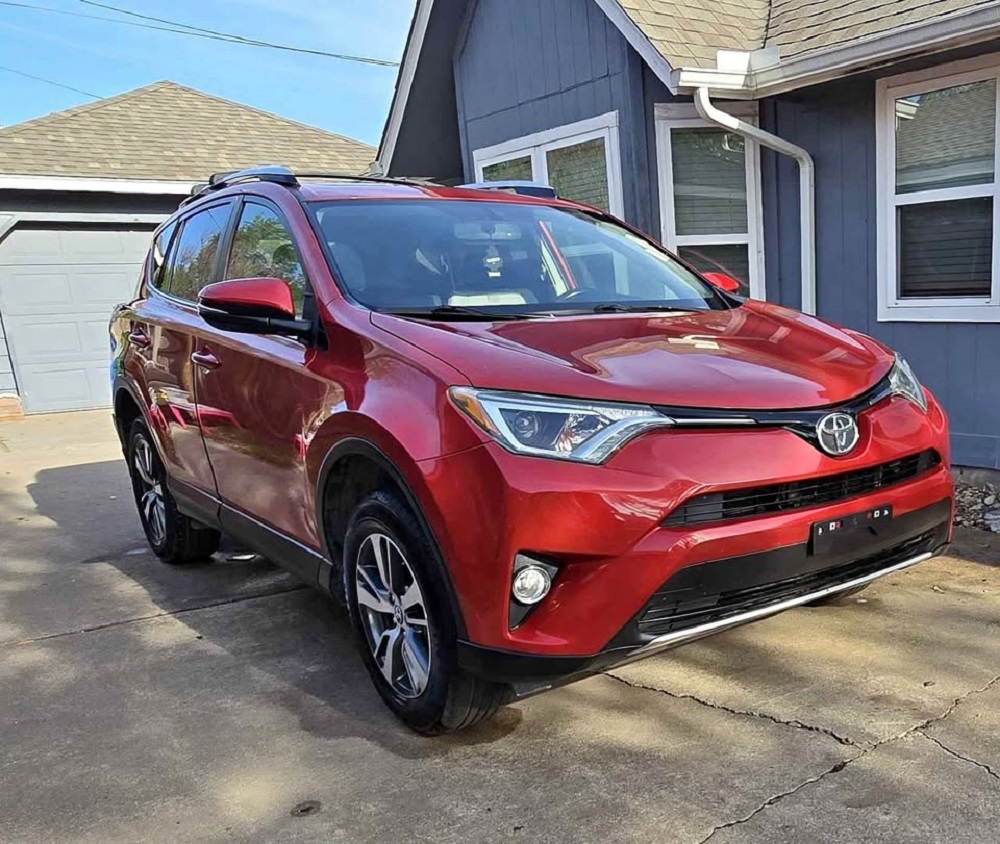
1. How Big Is This Recall? Think Nearly 2 Million RAV4s
If you’ve got a 2013–2018 RAV4 with a gas engine, not hybrid, you’re in the zone. Toyota’s recall covers roughly 1,854,000 vehicles in the U.S. and another 249,000 in Canada, all over the same issue: a battery that can rattle loose and potentially start a fire.
This isn’t a small-batch recall or something affecting just a few odd trims. It’s one of the largest RAV4-related safety campaigns to date.
Which RAV4s Are Involved?
Only the internal combustion engine (ICE) versions of the RAV4 are included; hybrids are not part of this recall. Affected vehicles fall within the 2013 to 2018 model years, and most have VINs starting with JTM or 2T3, which points to vehicles built in Japan and Canada.
Toyota assigned internal codes 23TA13 and 23TB13 to the campaign. NHTSA’s official reference is Recall No. 23V-734, so that’s what most dealers will use when checking your vehicle in the system.
2. What’s Sparking the Fire Risk? A Tray Too Big, a Clamp Too Close
This recall isn’t about some rare, fluke failure. It comes down to a mismatch between Toyota’s battery tray and the size of common aftermarket replacements.
Specifically, Group 35 batteries, even ones labeled correctly, can be just small enough to slide around in the oversized factory tray. And when that battery shifts, it can arc against the metal hold-down clamp, setting off a chain reaction that ends in a thermal event.
This isn’t theory. It’s happened, while parked, while driving, and sometimes just after startup.
Undersized Batteries, Oversized Problem
Even though Group 35 is the factory-spec battery for these RAV4s, aftermarket versions can vary slightly in dimension, especially in height and top width.
If the clamp isn’t cranked down tight, or if it loosens over time, that battery moves. The positive terminal ends up rubbing metal, and that’s where the short begins.
Add in some aggressive cornering or a bumpy road, and now you’ve got a hot battery terminal dancing on steel.
Real Fires, Real Complaints
This wasn’t a proactive recall; it followed a formal investigation. NHTSA opened Preliminary Evaluation PE21-005 after receiving 11 fire complaints, with 7 happening while driving and 4 while parked. Some owners even reported the car stalling just before smoke and flames kicked off.
What’s surprising is that Toyota didn’t issue a stop-drive warning. No order to park outside. No “shut it down now” messaging. The company acknowledged the fire risk but determined the likelihood didn’t warrant pulling the plug on daily use.
That puts the ball in the owner’s court.
3. Years in the Making: How Long This Took to Blow Open
Toyota didn’t launch this recall overnight. In fact, the road to Recall 23V-734 started way back in March 2021, when fire complaints started landing on NHTSA’s desk. What followed was a slow-build investigation, technical back-and-forth, and finally a multi-phase fix that’s still unfolding today.
Here’s how it played out:
Regulatory Timeline: From First Complaint to Final Fix
| Date | Milestone | Party | Notes |
| Mar 2021 | PE21-005 opened | NHTSA | 11 fire complaints kick off formal review |
| Nov 1, 2023 | Defect Info Report (DIR) filed | Toyota | Official recall announced |
| Dec 27, 2024 | Phase 1 remedy letters mailed | Toyota | Applies to 2013–14 RAV4s |
| Jan 14, 2025 | Final remedy TSB published | Toyota | TSB #RCRIT-23V734-9839 |
| Apr 2025 | Phase 2 parts expected | Toyota | Covers 2015–16 model years |
| Jul 2025 | Phase 3 parts projected | Toyota | Final batch: 2017–18 RAV4s |
What stands out here isn’t just the delay, it’s the disconnect between announcement and action. Toyota said it would start notifying owners in late 2023, but those letters didn’t actually hit mailboxes until December 2024.
That gap created real headaches for owners left in limbo, refreshing recall pages while the car sat in the garage.
4. Toyota’s Fix: New Parts, Free Labor, but Not a Free Battery
This isn’t just a band-aid job. Toyota’s remedy for the RAV4 battery recall includes a reworked battery tray, a redesigned hold-down clamp, and a protective cap for the positive terminal, all engineered to eliminate the risk of metal-on-metal contact. But while the install is free, it comes with a few conditions that owners need to be aware of.
Reengineered Hardware: What’s Getting Replaced
Dealers will install three new parts:
• A tighter-fitting tray designed to keep Group 35 batteries from sliding
• A reshaped clamp with more clearance from the terminal
• A plastic terminal cover to block arc paths if anything shifts
This install takes around 15–30 minutes at the dealership. Toyota’s footing the bill for both parts and labor, but there’s a catch.
Wrong Battery? You’re Still on the Hook
Toyota will not cover the cost of a replacement battery if yours is the wrong size. That means if your RAV4 has a Group 24, 26, or an undersized Group 35 battery installed, you’ll need to pay out of pocket to swap it for the correct Group 35F unit.
And until you do, the recall may remain open, because the new parts won’t work properly unless paired with the right battery.
This distinction has caused a lot of confusion among owners who assume the entire system, battery included, is covered. It’s not. Toyota will replace the hardware that surrounds the battery, but not the battery itself, unless it’s been damaged by the defect.
A “Part Two” Fix May Still Be Coming
There’s also talk of a second-phase redesign in the works. According to technicians quoted in forums like RAV4World, Toyota is reportedly developing a revised hold-down system that can better accommodate the slightly different top profiles found in many aftermarket Group 35 batteries.
That means even if your clamp gets replaced now, a future visit may be required if Toyota rolls out another design update to close the tolerance gap once and for all.
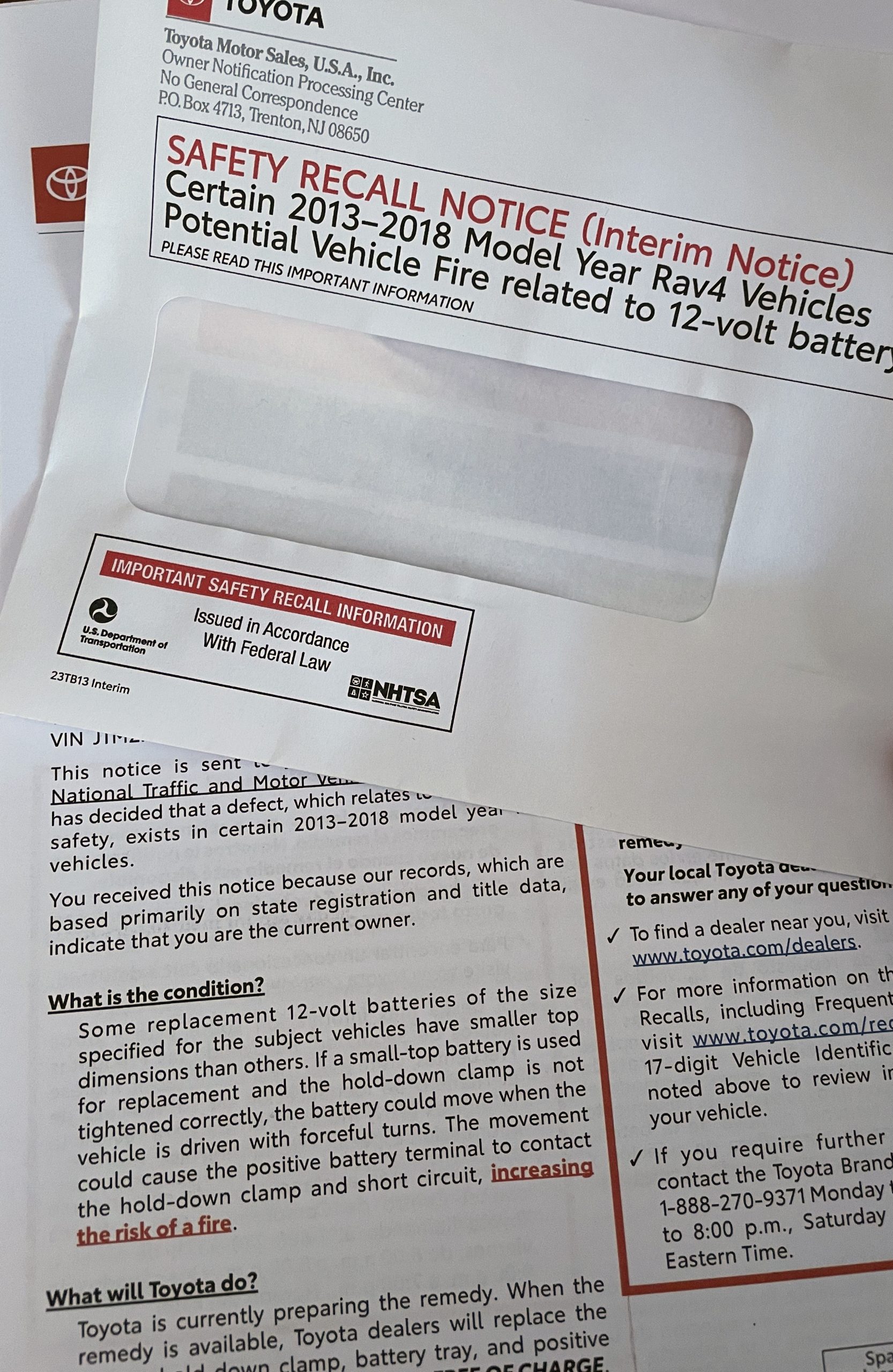
5. What You Should Do Now (Before Parts Run Out or Claims Expire)
If you haven’t already checked your RAV4’s recall status, now’s the time. Parts are rolling out in waves based on model year, and repair scheduling is hit-or-miss depending on location. Some owners are getting in and out the same day. Others are still waiting months. Your best move? Get ahead of the rush.
Step 1: Run Your VIN, Don’t Rely on the Mail
The fastest way to see if your RAV4 is under recall is to plug your 17-digit VIN into either:
Your VIN is stamped on the lower driver-side windshield and your registration card. If your vehicle is part of the campaign, it’ll show up with NHTSA Recall No. 23V-734 or Toyota’s internal numbers 23TA13 or 23TB13.
Don’t wait for a letter. Owners of 2015–2018 RAV4s may not even receive notification until late summer 2025.
Step 2: Know What to Ask For at the Dealer
Once you’ve confirmed your vehicle’s involved, call your Toyota dealer and ask for an appointment under recall campaign 23TA13. Some service departments have specific teams handling safety recalls, and knowing the code can speed things up.
If your parts aren’t in stock yet (especially if you’ve got a 2017 or 2018 model), ask to be added to the backorder list. While you’re at it, confirm whether they offer shuttle service or loaners; some do, especially if parts are delayed.
Step 3: Check Your Battery and Keep It Tight
While waiting for the fix, take a quick peek under the hood. If your battery isn’t stamped Group 35F, consider swapping it out early. At minimum, make sure the hold-down clamp is snug. A loose fit is what caused most of the thermal complaints in the first place.
Avoid hard cornering or sudden stops, especially if the battery has any play in the tray.
Need Help or Want to Report an Issue?
You’ve got two solid lifelines:
• Toyota Brand Engagement Center: 1-800-331-4331
• NHTSA Safety Hotline: 1-888-327-4236
Or, if you’ve experienced a stall, fire, or paid out of pocket for related repairs, you may be eligible for reimbursement through the class action.
6. Class Action Payback: What You Can Claim (and When to Do It)
Alongside the official recall, Toyota’s facing a class-action settlement, Murphy v. Toyota Motor Corporation, meant to cover costs owners already ate out of pocket. If you bought a battery, dealt with fire damage, or paid for repairs tied to this defect, you might get reimbursed. But the clock’s ticking.
Who’s Covered, and Why It Matters
This settlement targets anyone who owned or leased a 2013–2018 non-hybrid RAV4 as of June 25, 2024, the date the settlement agreement was finalized.
The lawsuit claimed Toyota sold vehicles with battery systems that could short-circuit and cause fires, but delayed taking responsibility. While Toyota doesn’t admit fault, the company agreed to a payout to resolve claims and avoid trial [Case Info: Murphy v. Toyota, No. 4:21-cv-00178-ALM].
What You Can Get
If you qualify, here’s what the deal offers:
• Free Battery Inspection & Hardware Replacement: Even if you didn’t go in for the recall yet, the settlement covers a check and install of new clamps, trays, and covers, if your battery is the right size.
• Battery Purchase Reimbursement (Up to $75): If you bought a new battery from a Toyota dealer, you can get up to $75 back. That includes retroactive reimbursement for anyone who got a $32 discount under service bulletin 21TG01.
• “Thermal Event” Compensation: If your car caught fire, stalled, or suffered damage tied to the defect, you could file for compensation; amounts vary based on receipts, invoices, or records.
No receipts? No reimbursement. You’ll need proof of ownership and documentation of the expense (credit card charges, work orders, canceled checks, anything that connects the dots).
Don’t Miss These Deadlines
Every benefit comes with its own cutoff. Miss it, and you’re out.
| Claim Type | Deadline |
| Opt out of the class action | Oct 21, 2024 |
| Object to the settlement | Sep 30, 2024 |
| File for out-of-pocket repair costs | Dec 1, 2024 |
| File for battery reimbursement | Jun 25, 2025 |
| File for fire/stall (“thermal”) claims | Jul 1, 2025 |
| Final court approval hearing | Nov 19, 2024 |
Bottom line? If you paid for anything tied to this battery mess, even just a replacement unit, check the official settlement site, submit your claim, and hang onto your paperwork.
7. What Owners Are Actually Seeing: From Delays to Misunderstandings
Recalls look clean on paper. Real life? Not so much. RAV4 owners across the U.S. are running into mixed results; some got fixed fast, others are still stuck in limbo. And misinformation is making things worse.
Delayed Letters, Spotty Scheduling, and Frustration
Many owners assumed they’d hear from Toyota shortly after the November 2023 recall filing. Instead, some didn’t get anything until late December 2024, despite Toyota’s early promises to mail notices “by the end of 2023”. That gap left owners guessing, refreshing VIN checkers, and calling dealers weekly with no answers.
Once parts began arriving in Phase 1 (for 2013–2014 models), the process sped up, at least for some. But for owners of 2015–2018 RAV4s, especially those stuck in Phase 3, the wait continues.
One Reddit user put it bluntly:
“It’s been over a year since they announced this. Still no letter. Still no parts. Dealer says check back in a few months.”
“Just Tighten the Clamp” Isn’t the Fix
Another common myth floating around? That this is just a loose clamp issue. Some owners (and even a few underinformed techs) have brushed it off as a “5-second fix,” just torque the hold-down bolt or slap on some Loctite.
But Toyota’s remedy replaces the tray, clamp, and terminal shield. It’s a full hardware update, not just a twist of a wrench. And if your battery isn’t the right Group 35F size, the new clamp may not seat correctly, which keeps the recall open until you install the right unit.
Not Starting? Clicking? Humming? You’re Not Alone
Some owners are spotting early symptoms before they even know their vehicle is under recall:
• Clicking or buzzing from the engine bay
• Intermittent no-starts, especially after sitting overnight
• Battery needing frequent jumpstarts
These can be signs that the terminal is contacting metal or the battery isn’t seated securely.
One owner described it like this:
“I heard a weird electrical hum, then a pop. Next day it wouldn’t start without a jump. Dealer told me battery was shifting in the tray.”
Used Market Red Flags
Thinking about buying a used 2013–2018 RAV4? This recall can throw a wrench into resale confidence. While repairs are free for current owners, open recalls can lower resale value and raise red flags for private buyers and dealers alike.
Some savvy shoppers are using this recall as a bargaining chip. Others are walking away entirely.
8. Why Toyota’s Brand Isn’t Taking a Hit And Where It’s Headed Next
For most automakers, a two-million-unit fire-risk recall would send shockwaves through sales and customer loyalty. But Toyota? It’s walking away with barely a scratch. And with the next-gen RAV4 already leaning hard into hybrid tech, this 12-volt recall may soon be a footnote.
The Loyalty Buffer: Why Owners Are Still Sticking Around
Toyota has something few brands do: a trust bank. Even with delays, missed mailouts, and owner headaches, most customers still rate Toyota highly for safety and service.
This so-called “brand insulation effect” is real. Studies show that Toyota owners are more likely to tolerate recalls and still come back for their next vehicle. It’s not that the defect doesn’t matter; it’s that Toyota’s broader reputation for reliability cushions the blow.
That said, too many drawn-out campaigns could change that. And Toyota knows it.
New RAV4, New Battery Strategy
If you’re wondering whether this issue hints at a larger problem with Toyota’s battery tech, the answer is no. This recall is about an old-school 12-volt starter battery, not the high-voltage hybrid packs.
The future is already here: Toyota confirmed the next RAV4 will be hybrid or plug-in only starting with the 2026 model year. That shift comes with all-new battery control systems, redesigned powertrains, and more robust charging infrastructure.
The goal? Longer electric range, quicker charge times, and a tighter power unit footprint, thanks to components like silicon carbide semiconductors and reworked power control units.
So while this current recall centers on a clunky hold-down clamp, Toyota’s battery future is anything but primitive.
Wrap-Up: If You’ve Got One of These RAV4s, Don’t Wait
If your RAV4 falls in the 2013–2018 range, this battery recall isn’t optional, especially with fires already on record. The fix is free, but availability is staggered by model year, and parts for many owners won’t arrive until mid-to-late 2025.
So here’s what matters most:
• Run your VIN now using Toyota’s or NHTSA’s recall lookup tools. Don’t wait for a letter.
• Get on the dealer’s radar early, especially if you’re in Phase 2 or 3.
• Make sure your battery is Group 35F; otherwise, the recall stays open and your car stays at risk.
• Keep your paperwork if you’ve already paid for repairs or replacements; the class action could cover it.
This issue might not be a stop-drive emergency, but it’s serious. And with deadlines coming for both repairs and reimbursement, putting it off could cost you more than just time.
Sources & References
- NHTSA Part 573 Safety Recall Report (23V-734)
- Toyota Recall Notice – Owner Notification Letter
- Technical Service Bulletin RCRIT-23V734-9839
- NHTSA Preliminary Evaluation on RAV4 Fires (PE21-005)
- Toyota Recalls Nearly 1.9M RAV4s Due to Battery Fire Risk – NPR
- Look Up Recalls by VIN – Toyota.com
- Vehicle Recall Search – NHTSA.gov
- Toyota Customer Support
- Toyota RAV4 Battery Recall Details – RepairPal
- Toyota RAV4 Battery Class Action Settlement – TopClassActions.com
- RAV4 Battery Recall Discussion – r/rav4club
- Wow I’m Glad Nobody Got Hurt – r/Toyota
- 2015 Toyota RAV4 – The Center for Auto Safety
- The Brand Insulation Effect – TRC Market Research
- 2026 Toyota RAV4 Hybrid-Only Strategy – Chasing Cars
- New Generation RAV4 Launch Overview – Toyota Pressroom