
A metallic knock cuts through highway noise. Seconds later, the Sportage starts losing power.
Worn connecting rod bearings can destroy engines in certain older models. Specific Sportage engines and production groups have also been subject to oil-consumption guidance, fire-safety recalls, and engine-litigation coverage. Even completed recalls can’t erase every mechanical weakness.
This guide reviews documented campaigns and reported concerns from 2011-2026, explains which models deserve a closer look, and shows how engine choice, repair history, and warranty coverage can change the buying decision.
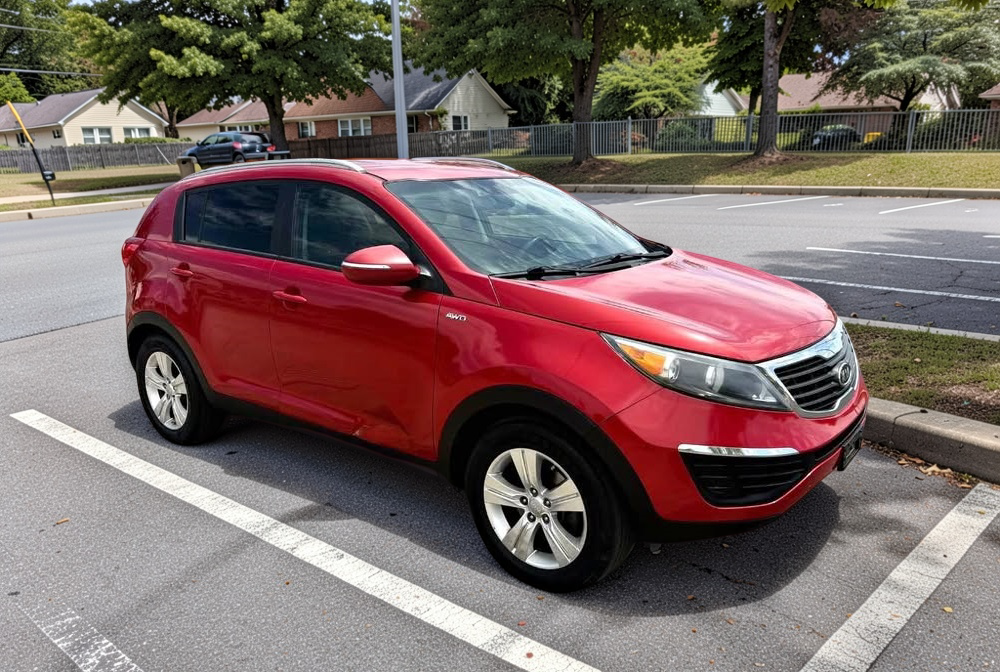
1. Which Kia Sportage Years Deserve a Closer Look?
The Riskiest Years and the Ones Worth a Closer Look
Some 2011-2013 Sportages are covered by engine-related campaigns, and IIHS assigns a Poor rating in the driver-side small-overlap test to the 2011-2016 Sportage. Campaign applicability varies by engine and VIN. The 2017-2018 buying caution is an editorial judgment, not an official year-level reliability rating.
Certain newer Sportages have different, equipment- or VIN-specific recalls, including brake and electrical-system campaigns.
| Model years | Editorial screening view | Issues to check on affected vehicles |
|---|---|---|
| 2011-2013 | Check engine and campaign history | Some engine campaigns; HECU recall eligibility varies; Poor driver-side small-overlap rating applies to 2011-2016 |
| 2014-2016 | Check engine and recall history | Engine concerns and HECU recalls apply to specified vehicles; Poor driver-side small-overlap rating |
| 2017-2018 | Review oil use and repair records | Owner-reported oil consumption and engine issues; HECU recall eligibility varies |
| 2019-2021 | Check VIN and equipment | Specified HECU and tow-harness recalls; review engine history |
| 2022 | Check engine, equipment, and anti-theft history | Tow-harness recall on equipped vehicles; anti-theft eligibility varies |
| 2023 | Check VIN and powertrain | Certain brake-booster, transmission oil-pump-controller, and cluster recalls |
| 2024-2025 | Check VIN and installed equipment | Some recalls remain equipment- or production-specific; 2024 has updated side-impact protection |
| 2026 | Too early for long-term reliability conclusions | Certain instrument-cluster recall |
The labels above are editorial screening guidance, not official year-level reliability ratings. The concerns are not present in every vehicle in a model-year band: eligibility depends on VIN, engine, equipment, powertrain, or production date. NHTSA complaint totals alone cannot establish failure rates without consistent vehicle-exposure data.
The Engine Under the Hood Changes the Risk
The 2011-2013 Sportage offered a naturally aspirated 2.4-liter MPI engine and a 2.0-liter turbo GDI. Both have documented engine concerns, but their recall coverage differs.
Kia replaced the 2.4-liter MPI with a direct-injected GDI version for 2014. That engine remained available through 2022, alongside the 2.0-liter turbo GDI. Both used a conventional 6-speed automatic.
The redesigned 2023 Sportage brought a different setup. Gasoline models switched to a 2.5-liter engine paired with an 8-speed automatic. Hybrid and plug-in hybrid versions used a 1.6-liter turbo engine with a 6-speed automatic.
This difference matters when checking recalls. The 2023 transmission oil-pump controller recall, 23V531 / SC275, targets certain vehicles with the 8-speed automatic. It doesn’t automatically cover the 6-speed hybrids.
For older models, engine identification also determines which bearing-related settlement may apply. The 2.4-liter MPI and GDI engines have different coverage terms, including a 15-year or 150, 000-mile limit for qualifying MPI vehicles.
2. Why Older Sportage Engines Can Fail Without Much Warning
Crankshaft Debris Can Destroy the Rod Bearings
Kia’s 17V224 / SC147 recall applied to affected-VIN 2011-2013 Sportages with 2.0-liter turbo GDI engines built from December 30, 2010, through August 30, 2013. Factory machining left metal debris inside some crankshaft oil passages, and uneven crankpin surfaces could contribute to the problem.
Restricted oil flow starves the connecting rod bearings. Friction wears away their protective surfaces, creating excess clearance between the bearings and crankshaft. A deep, repeating knock can follow, sometimes with an oil-pressure warning.
Keep driving, and the bearing can seize or fail. The engine may stall at highway speed, leaving the driver without power. Kia’s recall required engine inspections and long-block replacement when necessary.
The naturally aspirated 2.4-liter MPI engine had separate campaigns. Certain 2012 Sportages with 2.4-liter Theta II MPI engines built at Kia’s Hwasung plant from May 17, 2011, through May 24, 2012, were included in 20V750 / SC200, a preventive fire-risk recall. Kia said no manufacturing or design cause had been identified; dealers were directed to inspect for fuel or oil leaks, test the engine, make repairs if needed, and install KSDS when available.
Separately, PI2103 installed KSDS on certain 2011-2013 Sportages with 2.4-liter MPI engines. These MPI campaigns do not establish that MPI engines shared SC147’s crankshaft-debris and uneven-crankpin machining defect, which NHTSA scoped to 2.0-liter T-GDI Sportages.
A Replacement Engine Can Bring Another Fire Risk
An older Sportage with a replacement engine may be worth considering. But the repair invoice needs to show when the work happened, the mileage, and exactly what was replaced.
Kia’s SC172 procedure addresses a risk involving improperly fitted high-pressure fuel pipes after certain engine replacements. NHTSA’s 18V907 report lists certain 2011-2013 Sportages that received an engine replacement under SC147; Kia’s broader SC172 procedure separately includes certain VIN-listed 2011-2018 Sportages whose engines were replaced under SC147, PI1802/PI1803, or warranty.
During engine replacement, technicians could misalign the pipe or tighten its connections incorrectly. Fuel could then leak near hot engine parts, creating a fire risk.
The recall required dealers to inspect the fuel-pipe connections and replace the pipe when needed. For an affected VIN, the engine replacement invoice alone doesn’t prove this repair was completed.
A strong fuel smell near the engine is a reason to stop driving and arrange a tow. Before buying a previously repaired Sportage, get dealer records confirming completion of SC172.
3. Oil Consumption and P1326 Point to Different Engine Problems
When the Dipstick Drops but Nothing Leaks
Some Sportage engines burn oil between services without leaving a puddle. Worn piston rings can let oil enter the combustion chambers, where it burns with the fuel. The dipstick keeps dropping, even when the engine looks dry underneath.
Kia’s ENG222 bulletin, revised April 3, 2025, covers excessive oil consumption in certain 2011-2020 Sportages. It sets the excessive-consumption threshold at more than 1 quart per 1, 000 miles.
The dealer first checks for external leaks, fills the oil to the proper level, and starts a measured 1, 000-mile test. Tamper-evident seals help preserve the test conditions.
If consumption exceeds the limit, Kia’s procedure calls for combustion-chamber cleaning and another 1, 000-mile test. Continued excessive consumption can lead to authorized engine repair or replacement.
An oil-change receipt won’t reveal how low the crankcase ran between services. ENG222 is not a blanket warranty extension or a guaranteed free replacement: the procedure requires maintenance-record verification, engine replacement requires Technical Line PWA approval with the oil-consumption results, and out-of-warranty work requires DPSM approval.
A Flashing Check Engine Light Can Signal Bearing Trouble
A flashing check engine light followed by weak acceleration can point to P1326. This code is tied to Kia’s Knock Sensor Detection System, or KSDS.
KSDS monitors engine vibrations associated with connecting rod bearing wear. When it detects a matching pattern, the engine computer can restrict power through limp-home mode. That helps limit further damage, but it can’t repair a worn bearing.
Still, P1326 doesn’t automatically mean the engine needs replacement. Kia’s diagnostic procedures also address knock-sensor wiring interference, which can trigger the warning without confirmed bearing damage.
Depending on the applicable campaign, technicians may inspect the wiring, check engine noise, and run a bearing-clearance test. Failed results can lead to engine replacement, while certain electrical faults require harness repairs.
A Sportage showing P1326 needs prompt diagnosis rather than continued driving. The dealer’s campaign history should also confirm that KSDS software was installed. A clean OBD-II scan alone cannot prove the update is present or that the bearings are healthy.
4. Kia’s Engine Warranty Has Limits That Can Cost You Thousands
Two Engine Settlements Offer Very Different Coverage
Kia’s engine settlements extended warranty coverage for certain Sportages with connecting rod bearing damage. But the coverage depends on the engine, model year, and repair history.
The older Theta II GDI settlement offers limited lifetime coverage for qualifying bearing failures. A separate settlement covers the 2011-2013 Sportage with the 2.4-liter MPI engine.
| Sportage engine and years | Warranty coverage | Main condition |
|---|---|---|
| 2012-2018 and certain 2019 Sportages, covered 2.0L or 2.4L Theta II GDI | Limited lifetime warranty for qualifying short-block damage from connecting-rod-bearing wear | KSDS installation generally required before failure; VIN and settlement terms apply |
| 2011-2013, 2.4L MPI | 15 years or 150, 000 miles | Qualifying bearing failure, generally requiring KSDS before failure |
The GDI settlement covers qualifying damage to the engine’s short block, including the crankshaft, connecting rods, bearings, and pistons. Eligible subsequent owners can also receive coverage.
The MPI settlement covers qualifying short-block and resulting long-block damage. Its terms generally require KSDS installation before failure. However, certain 2012 Sportages recalled under 20V750 qualify for an exception to that requirement.
Neither settlement offers unrestricted protection against every engine failure. Oil consumption, piston ring wear, and unrelated mechanical damage don’t automatically qualify.
The Warranty Terms That Can Leave Buyers Paying
The MPI settlement’s 15-year clock starts on the vehicle’s original retail delivery date. Buying a used Sportage doesn’t restart it.
By November 2026, some early 2011 models have already passed that limit. Others may have little coverage left, even with fewer than 150, 000 miles.
Maintenance records can also affect a claim. Kia’s settlement terms allow denial for exceptional neglect, but missing oil-change receipts alone don’t automatically establish neglect. Engine condition and service history both matter.
A seller’s claim of a lifetime engine warranty needs written confirmation. Ask a Kia dealer to check the VIN, engine type, KSDS history, and applicable settlement before buying.
The GDI settlement includes certain 2019 Sportages, not every vehicle from that model year. Don’t assume a 2020-2022 model carries the same lifetime protection without separate written confirmation from Kia.
5. Fire Recalls That Put Parked Sportages at Risk
A Short Inside the ABS Module Can Start a Fire
Several Kia Sportage generations faced fire recalls involving the Hydraulic Electronic Control Unit (HECU). This unit controls anti-lock braking and electronic stability functions.
An internal electrical short can draw excessive current and overheat the HECU. The danger remains even with the ignition switched off. Some affected vehicles showed ABS warning lights, burning smells, or smoke near the engine compartment.
Kia issued separate recalls covering different production years.
| Sportage years | Recall / Campaign | Required repair |
|---|---|---|
| Certain 2010-2013 vehicles | 23V652 / SC284 | Install specified lower-amperage HECU fuse(s); verify eligibility by VIN and equipment |
| 2014-2016 | 22V051 / SC227 | Replace the affected fuse with the specified capacity |
| 2017-2021, without Smart Cruise Control | 21V137 / SC206 | Install new ABS fuses; update HECU software on affected electronic-parking-brake models |
The SC206 repair differs by brake setup. Models without an electronic parking brake receive replacement ABS fuses. Affected electronic-parking-brake versions also need updated control software.
Kia instructed owners of affected, unrepaired vehicles to park outdoors, away from buildings and other cars. That warning applies even when the Sportage sits unused overnight.
One older recall is easy to misidentify. 22V800 / SC253 concerns certain 2008-2009 Sportages. It doesn’t apply to 2017 or 2020 models.
Why a Replaced Tow-Harness Fuse May Leave the Fire Risk Open
Another fire hazard affected certain 2017-2022 Sportages built from December 10, 2015, through December 7, 2021, when equipped with a Genuine Kia tow-hitch harness supplied by Mobis Parts America. Eligibility is VIN-specific.
Under 22V703 / SC249, moisture and debris could enter the harness control module. Contamination on its circuit board could trigger an electrical short and start a fire.
The harness remained a concern while driving or parked with the engine off. A tow hitch alone doesn’t prove the recalled Kia wiring harness is installed.
Kia’s initial interim remedy was to inspect the tow-harness fuse and replace it with a different-capacity fuse if needed. The final remedy replaces the affected harness control module and includes specified fuse work when necessary.
A Sportage that received only the earlier interim fuse repair still needed the final module replacement. Kia began mailing final-remedy follow-up notices in July 2023 and later renotified owners whose repairs remained incomplete.
Buyers should check the VIN and dealer repair history for SC249 completion. Kia’s instructions require affected, unrepaired vehicles to remain parked outdoors, away from structures and other vehicles, until the final recall repair is complete.
6. Kia Sportage Theft Problems Can Turn a Bargain Into an Expensive Mistake
Why Some 2022 Sportages Still Lack an Immobilizer
Certain 2011-2022 Sportages left the factory without an electronic engine immobilizer. Thieves could damage the steering column, bypass the ignition lock, and start affected vehicles without the original key.
Kia’s CS2302 campaign introduced anti-theft software for eligible turn-key models. It covers some 2011-2016 Sportage vehicles built from May 6, 2010, through November 16, 2015, and some 2017-2022 Sportage vehicles built from December 10, 2015, through December 7, 2021. Eligibility depends on anti-theft equipment and IBU/BCM configuration, so model year or build date alone does not establish coverage.
The update changes the body control module’s ignition-start logic. Once installed, the driver must lock the vehicle using the key fob to arm the added protection. Locking the doors manually doesn’t provide the same activation.
Push-button-start models with factory immobilizers don’t share this weakness. However, a 2022 model-year badge alone doesn’t prove that a Sportage has one.
Theft exposure can also affect insurance costs. Some insurers restrict coverage or charge higher premiums for vulnerable Kia models. Check the VIN, confirm the software update, and get an insurance quote before paying.
Kia’s New Ignition Protector Adds Another Layer of Security
Kia expanded its theft protection program with CS2312, introducing a reinforced ignition-cylinder protector. This hardware helps prevent thieves from removing the lock cylinder and reaching the ignition mechanism.
The protector uses zinc reinforcement and attaches around the ignition cylinder. It provides physical protection alongside the software update.
Earlier hardware protection programs focused on vehicles that could not receive the software. CS2312 covers certain Sportages whose IBU/BCM has already received the CS2302 anti-theft software upgrade; Kia’s bulletin sets separate model, production-date, and VIN requirements.
Kia’s CS2312 owner notice gives eligible owners through March 31, 2027, to have the free protector installed. That deadline matters for used-car buyers considering an older turn-key Sportage.
Dealer records should show whether the vehicle received CS2302, CS2312, or both. Neither repair installs a factory electronic immobilizer.
For an eligible Sportage without the protector, confirm availability with Kia before buying. The published March 31, 2027, deadline is for completing the hardware installation, not simply requesting an appointment.
7. The 2023 Sportage Has Two Recalls You Can’t Ignore
A Brake Booster Leak Can Leave You Fighting the Pedal
Kia’s 23V410 / SC272 recall covers certain 2023 gasoline Sportages built from January 12, 2022, through February 15, 2023. The problem starts inside the brake booster, where a misaligned diaphragm can allow vacuum to escape.
As vacuum assist drops, the brake pedal becomes harder to press. You need more leg force to slow the vehicle, especially during sudden stops. Stopping distance can increase even though the hydraulic brakes still work.
Kia instructed dealers to inspect the brake booster and replace it when necessary. The recall covers nearly 99, 000 vehicles, and repairs are free for affected owners.
A hard brake pedal on an unrepaired 2023 Sportage warrants immediate attention. Confirm SC272 completion through the VIN and Kia’s dealer service records before buying.
A Faulty Transmission Oil Pump Controller Can Overheat
Another recall, 23V531 / SC275, targets certain 2023 Sportages built between November 2, 2022, and May 30, 2023. These vehicles use the 8-speed automatic transmission.
The fault sits inside the Idle Stop & Go electric oil-pump controller. A ceramic capacitor damaged during manufacturing can short the circuit board. Heat can then damage the controller, electrical connector, and nearby wiring.
Affected drivers may see several warning lights, lose Idle Stop & Go operation, or experience reduced engine power. Smoke from the engine compartment is another possible warning. The electrical short can also increase the risk of fire.
Kia’s repair calls for replacing the transmission oil-pump controller. The engine oil pump isn’t involved, and a software update alone doesn’t address the defective hardware.
The recall doesn’t automatically include hybrid or plug-in hybrid Sportages, which use a different 6-speed automatic. Kia advised owners of affected, unrepaired vehicles to park outside and away from structures until the controller is replaced.
8. Newer Sportages Still Have Electrical and Safety Recalls
A Blank Instrument Cluster Can Hide Critical Warnings
Kia issued 3 separate instrument-cluster recalls covering different Sportage years. Drivers can lose the speedometer, tire-pressure warnings, and other dashboard alerts while the vehicle is moving.
The first, 23V298 / SC270, covers certain 2023 gasoline, hybrid, and plug-in hybrid models. Voltage instability during startup can interfere with the cluster software, leaving the display blank. Kia’s remedy is a free software update.
A later recall, 25V874 / SC359, involves certain 2024-2025 gasoline Sportages and 2023-2025 plug-in hybrids. These vehicles have a 4.2-inch instrument display and a Genuine Kia tow-hitch wiring harness.
A software fault in the tow-harness control module can blank the instrument display. Dealers replace the module under the recall. This differs from the older tow-harness fire campaign, which addressed electrical shorts.
The newest campaign, 26V046 / SC361, covers certain 2026 gasoline, hybrid, and plug-in hybrid Sportages equipped with an affected 12.3-inch instrument cluster. A power-management component may enter overheat-protection mode, delay processing, and temporarily blank the display, hiding information such as the speedometer, TPMS warning, and other indicators. Kia’s remedy is improved cluster software, by over-the-air update where available or through a dealer.
Steering and Roof Defects Affect Specific Production Runs
The 2024 Sportage also faced a steering recall, 24V422 / SC319. It covers certain gasoline models built between April 30 and May 23, 2024.
Contamination on the electric power steering circuit board can cause an internal short. The power steering assist may then stop working, making the wheel harder to turn. Drivers will notice the extra effort most at low speeds.
Kia’s repair requires replacing the motor-driven power steering power pack. The recall covers a narrow production window, so it shouldn’t be treated as a defect affecting every 2024 Sportage.
Another recall, 24V025 / SC292, concerns certain 2023-2024 gasoline Sportages built at Kia Georgia from January 12, 2022, through November 29, 2023. Roof-molding retaining clips can interfere with excessive roof-panel sealer, or the molding may be improperly installed, allowing it to loosen or detach while driving.
Dealers inspect the roof molding and secure or replace it when needed. Loose trim can become a road hazard for vehicles traveling behind the Sportage.
Before buying, check the 17-character VIN through NHTSA and request Kia dealer service records. NHTSA’s VIN search reports unrepaired safety recalls; it does not show recalls already repaired, some newly announced recalls before all affected VINs are identified, recalls more than 15 years old (with exceptions), or manufacturer customer-service and other non-safety campaigns.
A clean recall search therefore does not confirm that prior engine-software, theft-deterrent, or other campaign work was completed. Ask Kia to verify the vehicle’s campaign and repair history by VIN.
9. Crash-Test Results Add a Safety Consideration for Some Older Sportages
The 2011-2016 Sportage Has a Poor Rating in One Frontal-Crash Test
The Insurance Institute for Highway Safety (IIHS) assigns the 2011-2016 Sportage a Poor rating in its driver-side small-overlap crash test, based on its test of the structurally similar 2013 Hyundai Tucson. This rating applies to that specific test, not every frontal-crash scenario.
This test simulates a crash where only the front corner strikes an object. The narrow impact can bypass major crash structures and push the wheel and suspension toward the driver’s footwell.
IIHS also assigns Good ratings in the original moderate-overlap and roof-strength tests, based on the structurally similar Tucson. The original side-impact Good rating is based on a Sportage test and applies to 2012-2016 models.
A replaced engine or completed HECU recall won’t change that crash structure. Even a well-maintained 2016 Sportage retains the Poor driver-side small-overlap rating.
Why the 2024 Sportage Offers Better Side-Impact Protection
Kia strengthened the Sportage’s body structure for 2024. The changes included reinforced B-pillars, stronger door beams, and new rear seat-mounted side thorax airbags.
The B-pillars support the roof between the front and rear doors. In a side impact, stronger pillars and door beams help limit how far the struck side moves into the cabin.
The added rear airbags protect passengers’ upper bodies during side crashes. Earlier 2023 models didn’t have these specific structural upgrades.
IIHS awarded the updated 2024 Sportage a Good rating in its tougher side-impact test. Both front and rear occupants received Good head and neck protection ratings, while torso protection earned Acceptable marks.
These 2024 changes and the Good updated side-impact rating support improved protection in that test scenario; they do not by themselves establish an overall safety advantage over the 2023 model. Long-term engine reliability is a separate question. The reinforced side structure and added rear airbags began with the 2024 model year.
Sources & References
- Kia Engine Settlement – Frequently Asked Questions
- Kia Engine Settlement – Owner Pamphlet
- Safety Recall Report 17V-224
- 17V-224 Part 573 Safety Recall Report
- Safety Recall Report 20V-750
- Kia PI2103 Service Bulletin
- Safety Recall Report 18V-907
- Kia ENG222 Oil Consumption Service Bulletin
- Safety Recall Report 23V-652
- Safety Recall Report 22V-051
- Safety Recall Report 22V-703
- Kia CS2302 Anti-Theft Software Campaign Bulletin
- Kia CS2312 Ignition-Cylinder Protector Campaign Bulletin
- Safety Recall Report 23V-531
- 26V-046 Instrument-Cluster Recall Notice
- 26V-046 Instrument-Cluster Recall Report
- Safety Recall Report 24V-025
- NHTSA 2023 Kia Sportage Recalls
- NHTSA 2024 Kia Sportage Recalls
- NHTSA 2025 Kia Sportage Recalls
- NHTSA 2026 Kia Sportage Recalls
- NHTSA Recalls Lookup and Search Limitations
- IIHS 2016 Kia Sportage Ratings
- IIHS 2023 Kia Sportage Ratings
- IIHS 2024 Kia Sportage Ratings
- Kia Anti-Theft Campaign Eligibility Lookup