
Mid-merge, the Optima stops pulling and the check-engine light starts flashing. Kia’s bearing-detection software can cut power when it senses vibrations linked to worn bearings. The software warns you. It doesn’t repair the wear.
Certain 2011–2015 gas models warrant extra scrutiny, especially when engine records are missing or applicable fire recalls remain open. Depending on the VIN, some cars may have separate bearing-related engine and brake-control-unit fire campaigns. One can stall the engine; the other can start a fire while parked.
The 2016 redesign didn’t end the bearing concerns. A well-documented 2019–2020 deserves a closer look, but that preference doesn’t establish a lower failure rate.
The engine, transmission, and condition still matter. This guide sorts the years to avoid, compares gas and hybrid risks, and explains which repairs and warranty limits change the deal.
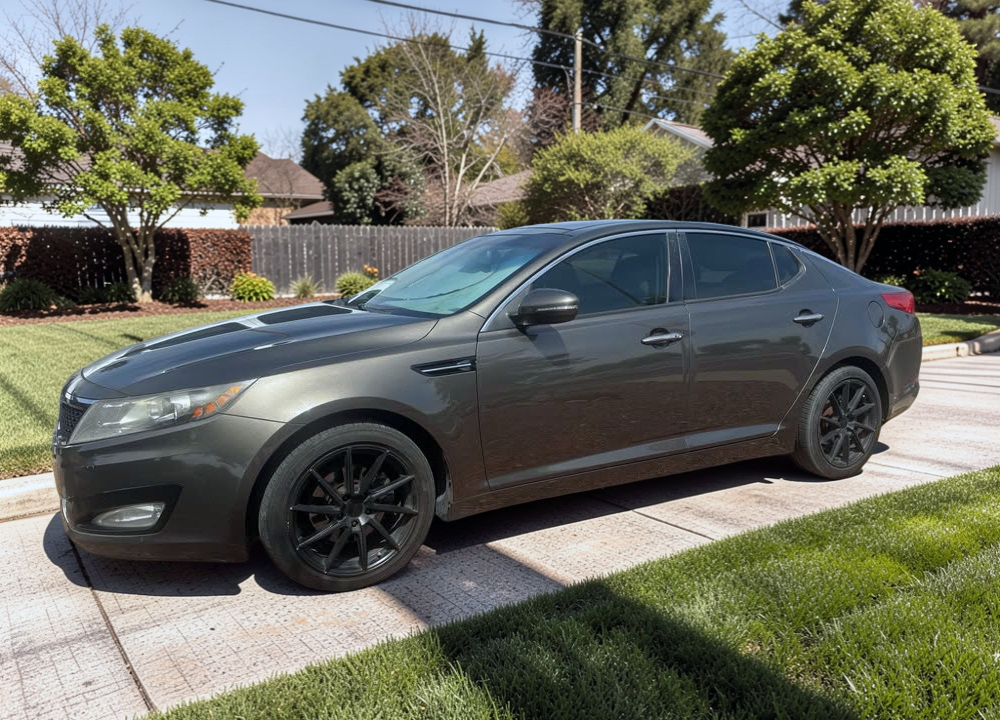
1. Which Optima years belong on your avoid list
Why 2011–2015 warrant closer scrutiny
The biggest concern with these cars is overlapping defects. Worn engine bearings can cause a stall, while a separate brake-control-unit short can start a fire. Recall eligibility depends on the vehicle’s VIN, production details, engine, and campaign history. Missing repair records leave you guessing which work remains.
The 2015 gas Optima needs special care when reading recall claims. It falls outside the original 17V-224 / SC147 engine recall, which covers certain 2011–2014 cars. Certain 2015 2.4-liter GDI and 2.0-liter turbo GDI Optimas were later included in KSDS-related service procedures and settlement terms, subject to engine and VIN eligibility. The separate fire recall reaches certain 2011–2015 models.
| Gas model years | Buying position | What separates them |
|---|---|---|
| 2011–2014 | Check recall and repair records carefully | Certain cars fall within bearing-related engine and brake-control-unit fire recalls. Other fuel-line recalls apply to VIN- and repair-history-defined groups. |
| 2015 | Keep on the caution list, but verify by VIN | Certain 2.4-liter GDI and 2.0-liter turbo GDI cars have KSDS-related service procedures and settlement terms. Certain cars also fall within the separate fire recall. |
| 2016 | Check engine, campaign status, and build date | Bearing concerns continued for eligible powertrains. Certain 2.4-liter cars also have a right-front driveshaft recall. |
| 2017–2018 | Judge by engine and transmission | The 2.4-liter and 2.0-liter turbo appear in the Theta II engine settlement. The 1.6-liter has separate dual-clutch transmission concerns. |
| 2019–2020 | Consider cars with strong records and a clean inspection | Certain 2019 Theta II cars remain in the engine settlement. Kia’s oil-consumption bulletin lists Optima applications through 2020, subject to its model and engine coverage. |
A newer badge doesn’t settle the engine question
A well-documented 2019–2020 deserves a closer look, but that preference doesn’t establish a lower failure rate. The 2020 still offered a 2.4-liter GDI, 2.0-liter turbo GDI, and 1.6-liter turbo. The 2.4-liter and 2.0-liter turbo remained Theta II engines.
Warranty coverage also changes within that pair of model years. The gas-engine settlement lists certain 2019 Optimas but doesn’t list the 2020 gas model. A seller’s “lifetime engine warranty” claim needs written confirmation from Kia for that VIN and engine.
Oil use needs its own paper trail. Kia’s ENG222 Rev. 8 includes specified Optima applications through 2020 and calls for measured oil-consumption testing. A full dipstick on the sales lot won’t show how much oil disappeared over the previous 1,000 miles.
An older car with documented engine work may deserve consideration over a later car with unresolved oil burning. The replacement invoice should identify the engine assembly fitted and the mileage at installation. That replacement leaves the transmission’s clutch wear and accumulated mileage unchanged.
Earlier Optimas bring age into the repair bill
The 2001–2010 cars are roughly 16–25 model years old in 2026. Low complaint totals alone don’t make a 2009 or 2010 the safest buy. At that age, service history and an inspection carry more weight than a simple year ranking.
Cracked hoses, leaking seals, worn suspension bushings, and corroded brake lines need direct inspection. The asking price must leave room for whatever that inspection finds. On engines fitted with a timing belt, a quiet idle doesn’t prove the belt is within its replacement interval. Check the service schedule for the exact year and engine.
2. The engine trouble behind the Optima’s reputation
How a bearing knock becomes a stalled engine
On certain 2011–2014 gas Optimas, Kia traced bearing wear to crankshaft machining defects. Metal debris could remain inside oil passages, and crankpin surfaces could have an uneven finish. Those conditions could restrict oil flow to the connecting-rod bearings.
The bearings need oil between their surfaces and the spinning crankshaft. As they wear, a repeating metallic knock can develop. Kia’s recall notice also identifies engine-warning and oil-pressure lights as possible signs before a stall.
17V-224 / SC147 calls for inspection and engine replacement when needed. That machining explanation belongs to this recall; it doesn’t establish the cause of every later Optima engine failure. On a repair invoice, “inspected and passed” means the existing engine passed that inspection. It doesn’t mean Kia installed a replacement.
Why P1326 needs more than a code reader
Kia’s Knock Sensor Detection System, or KSDS, watches for vibrations linked to connecting-rod bearing wear on vehicles covered by the applicable campaign. When triggered, it can store P1326, flash the check-engine light, and limit engine speed. The limit is roughly 1,800–2,000 rpm, leaving little acceleration for merging or climbing a hill.
P1326 alone doesn’t prove the engine needs replacement. Kia’s PI1803Y/Z procedure for eligible early Optimas starts with a bearing-clearance test. A dedicated tool uses air pressure and vacuum to check for excess bearing clearance. The results direct the technician toward further software work or engine replacement.
An engine that already knocks severely or has seized follows a different branch of that procedure. Kia directs dealers to seek authorization for replacement. If yours starts knocking or shows an oil-pressure warning, pull over safely, shut it off, and arrange a tow. The software can limit engine speed, but it can’t restore oil pressure or repair damaged bearings.
A full dipstick can hide an oil-burning engine
Oil consumption needs a separate diagnosis from bearing failure. A low dipstick shows missing oil, but it doesn’t establish where that oil went. Kia’s ENG222 Rev. 8, dated April 3, 2025, includes 2011–2020 Optima applications and requires checking for leaks before measuring consumption.
The procedure starts with a documented oil level and a 1,000-mile test. Consumption above 1 quart per 1,000 miles triggers combustion-chamber cleaning under the applicable procedure. Another 1,000-mile test follows. A second excessive result directs the repair toward engine replacement, subject to maintenance review and authorization. The bulletin does not expressly classify a result of exactly 1 quart per 1,000 miles.
For a used car, the useful record shows miles driven, oil added, and results after cleaning. An invoice for an oil change won’t establish consumption between services. Even below Kia’s repair threshold, an engine can still need oil between changes.
3. What “lifetime engine warranty” actually covers
The engine decides which warranty applies
A seller’s “lifetime warranty” promise can hide a narrow repair limit. The two engine settlements cover specified bearing-related damage, subject to their terms. Oil burning alone doesn’t establish a covered failure.
| Optima engine | Model years listed | Bearing-related warranty |
|---|---|---|
| Gas 2.4-liter GDI or 2.0-liter turbo GDI Theta II | 2011–2018 and certain 2019 cars | Lifetime short-block coverage for eligible cars with KSDS completed, subject to settlement terms and exclusions. |
| Hybrid 2.4-liter MPI Theta II | 2011–2016 | Qualifying bearing-caused engine damage for 15 years or 150,000 miles, whichever comes first, subject to the applicable settlement terms. |
| Hybrid or plug-in hybrid 2.0-liter GDI Nu | 2017–2020 | Separate 15-year/150,000-mile coverage may apply to qualifying vehicles and bearing-related damage, subject to campaign and settlement terms. |
The gas settlement’s short-block coverage includes the block, crankshaft, connecting rods, bearings, and pistons. It applies to qualifying bearing wear or damage. It doesn’t promise free repairs for every fault elsewhere in the engine.
The 2020 gas Optima isn’t listed in that settlement, and neither is the 1.6-liter turbo. Any coverage for those cars needs a separate VIN-specific answer from Kia. A shared Optima badge doesn’t extend the settlement to another engine. Hybrid coverage is separate and has its own eligibility terms.
Missing KSDS can change the claim
The gas settlement requires the KSDS update for its lifetime warranty extension. The separate hybrid settlement generally requires installation before a qualifying failure. It includes a specific exception for some vehicles previously recalled under 20V-750 or 21V-844. Check the settlement and VIN-specific terms.
For those recalled vehicles, missing KSDS doesn’t automatically defeat the extended engine warranty. Other settlement payments can carry different requirements. Eligibility for an engine repair therefore doesn’t establish eligibility for every towing or rental expense.
Age also matters on a Hybrid. The 15-year clock starts at original retail delivery, so some 2011 cars reach that limit in 2026. Buying one used doesn’t restart it. Coverage ends at the earlier limit, even if the odometer remains below 150,000 miles.
The paperwork that can decide who pays
Before paying for the car, get Kia’s written coverage and campaign status for its VIN. The record should identify the engine, KSDS completion, and any applicable warranty limit. Keep the engine-replacement invoice alongside oil-change receipts, including dates and mileage.
Both settlements retain exclusions, including defined cases of exceptional neglect. Maintenance records can matter when Kia reviews the engine’s condition and repair history. A replacement engine invoice alone won’t document oil changes after installation.
An NHTSA search showing no open recalls doesn’t establish KSDS completion or future warranty eligibility. Its VIN results identify unrepaired safety recalls. Kia’s records must answer the coverage question. A clean recall result isn’t proof that a later bearing repair will be paid.
4. Why the Hybrid badge doesn’t remove the engine risk
The early Hybrid has a different 2.4-liter
The 2011–2016 Optima Hybrid uses a 2.4-liter MPI Theta II engine with port fuel injection. The regular gas Optima’s 2.4-liter GDI injects fuel directly into the cylinders. Their shared engine size doesn’t make recall repairs or warranty terms interchangeable.
For 2011–2013 Hybrids, 20V-750 / SC200 addresses engine-compartment fire risk. Kia’s remedy includes checking for fuel or oil leaks, testing the engine, and repairing or replacing it when needed. The recall also requires KSDS software installation for vehicles where the recall remains incomplete.
Kia’s October 24, 2022 SC200 re-notification says both the engine inspection and software update are required as part of the recall. The June 14, 2021 follow-up had announced that the KSDS update was available. An early inspection receipt may therefore leave part of the recall unfinished. A software-only visit doesn’t document the required engine inspection either.
The newer 2.0-liter brought another bearing recall
The 2017–2018 Hybrid and plug-in hybrid use a 2.0-liter GDI Nu engine. Both appear in 21V-844 / SC218, which addresses connecting-rod bearing damage. The warning signs include abnormal knocking and an oil-pressure light.
Continued driving can let the damage progress until the engine stalls. A connecting rod can also puncture the block, spilling oil onto hot exhaust parts. That creates a fire risk, even though this engine belongs to a different family from the earlier Theta II.
Kia’s remedy combines an engine test, replacement when needed, and KSDS installation. The owner notice estimates 1–2 hours for testing and about 1 hour for software installation. An engine replacement requires 8 hours or more, before allowing for scheduling or parts delays.
Later Hybrids still need the software record
The 2019–2020 Hybrid and plug-in hybrid received a separate KSDS campaign, PI2108. Kia issued it to detect vibrations linked to excessive connecting-rod bearing wear. Only vehicles within the campaign’s production and VIN range qualify.
Kia’s campaign notice provides bearing-related long-block coverage for 15 years or 150,000 miles, whichever comes first from the vehicle’s first in-service date, after the software update. It applies to qualifying new and used owners, subject to maintenance and other campaign terms. Confirm the campaign status and remaining coverage by VIN before buying.
The high-voltage battery needs a separate assessment, including a scan for stored hybrid faults. On a plug-in model, the inspection should also confirm that the car accepts a charge. Bearing-related engine coverage doesn’t pay for a traction battery simply because it has lost capacity.
5. The fire recalls a replacement engine won’t close
The fire risk can remain after parking
23V-652 / SC284 covers certain 2011–2015 gas Optimas and 2011–2013 Hybrids. The Hydraulic Electronic Control Unit, or HECU, controls hydraulic braking functions. An electrical short inside it can start an underhood fire while driving or parked.
Kia’s remedy installs new fuse(s) in the HECU circuit at no charge. An engine replacement doesn’t complete this brake-related recall. Until the recall repair is done, Kia instructs affected owners to park outdoors, away from vehicles and structures.
An engine swap can leave a fuel leak
18V-907 / SC172 addresses high-pressure fuel pipes disturbed during earlier engine replacements. The original recall covered certain 2011–2014 Optimas repaired under SC147. An expansion added eligible 2014–2017 cars with engines replaced under warranty or the KSDS campaign.
During that work, the pipe could be damaged, misaligned, or tightened incorrectly. Fuel could then leak at its connection to the high-pressure pump. Kia’s remedy checks that connection and replaces the pipe when required.
For a car with a replacement engine, the SC172 record belongs beside the engine invoice. The invoice alone won’t show whether Kia checked the fuel-pipe connection afterward. If you smell fuel inside or near the car, Kia says to stop driving and have it towed.
Some fuel-hose repairs needed a second visit
Certain 2013–2014 Optimas received heat-protective tape under 20V-100 / SC187. Kia later found that some tape repairs could be incomplete, including cases where a damaged tube needed replacement. Under SC187, however, tape was an authorized remedy when inspection found no damage or leak.
The follow-up recall, 22V-093 / SC228, covers a VIN- and repair-history-defined group of affected cars that received the tape repair. An SC187 receipt therefore doesn’t establish that any later SC228 work is complete. Kia must confirm SC228 status for the VIN.
SC228 replaces the low-pressure fuel tube with an improved assembly at no charge. The replacement uses different tube material, a protective sleeve, and a revised connector structure. Those changes increase resistance to heat and stress.
6. The smaller turbo brings a different repair risk
The 1.6-liter needs a slow-speed test
The 1.6-liter turbo pairs with a 7-speed dual-clutch transmission, or DCT. The 2.4-liter and 2.0-liter turbo use conventional 6-speed automatics. Choosing the 1.6 avoids those Theta II gas engines, but adds a clutch-engagement concern.
Kia’s TRA098, issued in August 2021, covers certain 2016–2020 Optimas with the 1.6-liter and DCT. It describes clutch judder when pulling away from a stop. During the specified creep test, the body vibrates at speeds up to 3 mph, without the steering wheel shuddering.
That makes parking-lot speed part of a useful test drive. Let the car creep forward where it’s safe, then note any repeated body shake. A smooth highway run won’t reproduce the low-speed condition described in the bulletin.
Kia’s repair path checks the installed software and applies updated anti-judder logic when needed. If the shake remains, the bulletin directs technicians to TRA083 for further clutch diagnosis and repair. A seller’s “they all do that” answer doesn’t establish whether either procedure was completed. The software update alone doesn’t guarantee the judder is gone.
A broken axle can feel like a dead transmission
Certain 2016 2.4-liter Optimas fall under 16V-705 / SC139 for the right-front axle driveshaft. The affected production window runs from November 13, 2015, through April 23, 2016. Kia must confirm inclusion by VIN.
A crack can form near the wheel end of the shaft. When the car pulls away, the shaft can separate with a loud noise, leaving no drive. That sudden loss of movement needs an axle inspection before anyone blames the transmission.
The recall replaces the affected right-front driveshaft at no charge. A transmission-fluid invoice doesn’t document that repair. With the shaft separated, the car can also roll on an incline if the parking brake isn’t applied.
7. The steering clunk and airbag light need separate answers
A worn coupling can sound like a costly steering repair
Certain 2011–2014 Optimas can clunk when you turn the steering wheel, especially while stopped. Kia’s CHA072 / CS1604 traces this noise to a worn flexible coupling inside the electric power-steering unit. The repair replaces that coupling, rather than automatically replacing the entire steering column.
Kia identified the wear mainly in warm, humid coastal states and offered replacement for eligible cars there. For vehicles sold or registered in other states, it extended coupling coverage to 10 years with unlimited mileage for the specified condition. That clock starts at first service, so many affected cars are now beyond the time limit.
Binding, heavy steering, or poor return to center needs a broader diagnosis. Those symptoms shouldn’t be dismissed because a coupling bulletin exists. CHA072 addresses turning noise; it doesn’t establish the cause of lost steering assistance.
The early airbag defect can stay hidden until a crash
18V-363 / SC165 covers certain 2011–2013 gas Optimas and 2011–2012 Hybrids, as well as specified other Kia models. Electrical overstress during a frontal crash can damage a circuit inside the airbag control unit. The front airbags and seat-belt pretensioners may then fail to deploy when needed.
A normal test drive won’t expose that crash-triggered defect. The VIN campaign record must show whether Kia completed the repair. The remedy installs a protective wire-harness kit between the airbag control unit and vehicle wiring, at no charge.
A later airbag warning may qualify for free repair
For 2019–2020 Optimas, WTY036 extends coverage for the specified airbag-warning-light condition to 15 years with unlimited mileage. Used vehicles qualify within the extension’s terms. The period starts when the car first enters service, and the original warranty exclusions still apply.
One related repair bulletin, BOD324, addresses codes B1380 and B1384 involving the front-seat side airbags. Kia identifies higher-than-normal resistance at the side-airbag connector as a possible cause. The technician checks the affected connection and replaces the side-airbag module if the specified fault remains. Other airbag codes require a different diagnostic path.
A seller shouldn’t dismiss the warning because the car still runs and steers normally. Have Kia diagnose it before the sale. The owner notice calls for diagnosis if the light stays on beyond 6 seconds after startup, or illuminates while driving.
8. Theft exposure can eat into the purchase saving
Check the ignition before pricing the insurance
Certain 2011–2020 Optimas lack a factory engine immobilizer, which blocks starting without an authorized key. Kia’s CS2303 campaign adds anti-theft starting logic through a body-control software update. Eligibility depends on the car’s equipment and VIN, not its model year alone. These are customer-satisfaction actions, not safety recalls.
Identify whether the car has a keyed ignition or push-button start, then have Kia confirm its factory protection. Ask for the software completion record on eligible cars. A window decal can indicate the update, but the dealer record ties that work to the VIN.
Get an insurance quote for that exact car before leaving a deposit. Compare the premium, theft coverage, and deductible against the purchase-price saving. The deductible remains your share of a covered claim.
The software receipt doesn’t prove the hardware is fitted
Kia’s CS2312 notice offers a zinc-reinforced ignition-cylinder protector for eligible cars that received the software upgrade, subject to VIN and build-range requirements. This adds physical protection at the ignition cylinder. A software receipt from 2023 doesn’t show that the newer protector was installed.
Eligible owners can request free installation through March 31, 2027, under the notice’s terms. Kia also tells owners with the software update to lock the car using the key fob. That action locks the vehicle and arms the software protection.
If a dealer can’t schedule installation by the deadline, contact Kia Customer Care before March 31, 2027. The notice allows later free installation when that contact occurs in time. The number is 800-333-4542; the deadline applies to contacting Kia, not merely asking the dealer for an appointment.
Sources & References
- NHTSA Part 573 Safety Recall Report 17V-224, Kia SC147
- Kia SC147 Safety Recall Campaign Questions and Answers
- Kia PI1802W/X, Engine Replacement Instructions for DTC P1326
- Kia PI1803, Knock Sensor Detection System ECU Logic Improvement
- Kia PI1803Y/Z, Engine Replacement Instructions for DTC P1326
- Kia ENG222 Rev. 8, Excessive Oil Consumption
- Kia Engine Settlement Frequently Asked Questions
- Kia Engine Settlement Revised Settlement Agreement
- Kia Engine Class Settlement Owner Pamphlet
- NHTSA Part 573 Safety Recall Report 20V-750, Kia SC200
- Kia SC200 Renotification and Follow-Up Notices, October 2022 and June 2021
- NHTSA Part 573 Safety Recall Report 21V-844, Kia SC218
- Kia SC218 Important Safety Recall Owner Notice
- Kia PI2108, Optima Hybrid and Plug-In Hybrid KSDS Campaign Questions and Answers
- NHTSA Part 573 Safety Recall Report 23V-652, Kia SC284
- NHTSA Amended Part 573 Safety Recall Report 18V-907, Kia SC172
- Kia SC172 Expansion Questions and Answers
- NHTSA Part 573 Safety Recall Report 20V-100, Kia SC187
- NHTSA Part 573 Safety Recall Report 22V-093, Kia SC228
- Kia SC228 Interim Owner Recall Notice
- Kia 2020 Optima Official Specifications
- Kia TRA098, 7-Speed DCT Anti-Judder Logic Improvement
- Kia TRA083, 7-Speed DCT Judder Inspection and Clutch Assembly Procedure
- NHTSA Part 573 Safety Recall Report 16V-705, Kia SC139
- Kia CHA072 / CS1604, MDPS Flexible Coupling Replacement
- NHTSA Part 573 Safety Recall Report 18V-363, Kia SC165
- Kia BOD324, Side Airbag Inspection and Replacement for DTC B1380/B1384
- Kia WTY036, 2019–2020 Optima Airbag Warning Light Warranty Extension
- Kia CS2303, Anti-Theft Software Logic Upgrade
- Kia CS2312, Ignition Cylinder Protector Customer Satisfaction Campaign
- New York Attorney General Assurance of Discontinuance, Kia Anti-Theft Protector Terms
- Kia Anti-Theft Support Actions and Customer Care Information
- NHTSA Recalls VIN Lookup