
Press the gas, and the bargain-priced Rio barely picks up speed. On certain 2020 models, a slipping transmission can explain that delay. Kia’s SA476 service action can call for replacement, so verify the transmission diagnosis, warranty status, and repair history before you buy.
The risks change with the year. Certain 2012–2017 Rios have a brake control unit that can short and start a fire, even while parked. Kia tells owners of affected, unrepaired cars to park outside, away from buildings and other vehicles. A clean test drive won’t clear that recall.
A low price needs repair records behind it. An unresolved fault can outweigh the year on the listing. This guide identifies which Kia Rio years deserve caution, what to check, and where newer cars offer better protection.
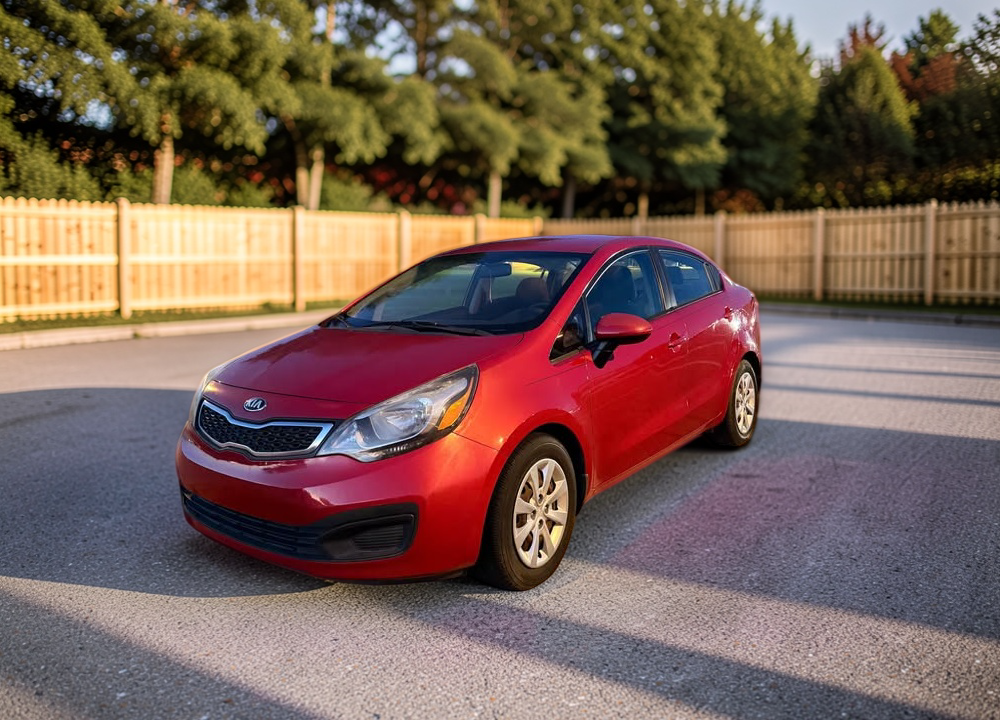
1. The Rio years that need the hardest look
The 2012–2017 Rios deserve the closest scrutiny, with a separate transmission warning for 2020. These buying judgments reflect documented defects, safety equipment, and repair history. Complaint totals can’t establish whether 2013 or 2014 fails more often without comparable sales, mileage, and age data.
| Model years | Buying position | What should drive your decision |
|---|---|---|
| 2001–2004 | Pass when maintenance history is thin | Age and overdue repairs add risk. Certain cars also fall under the fuel-distributor recall for gasoline leaks. |
| 2005–2011 | Budget options that need careful inspection | Timing-belt records matter. Judge the engine and gearbox by their condition, not a “good year” label. |
| 2012–2017 | Main caution group | Certain cars face the HECU fire recall. Oil loss needs investigation. IIHS rated driver-side small-overlap crash protection Marginal. Certain 2013 cars also have an engine-noise service action. |
| 2018–2019 | Worth considering with records | The redesigned body and available 6-speed automatic make these worth a look. Check oil use, theft protection, and sedan trunk-recall status. |
| 2020 | Require proof of transmission health | Kia introduced a new port-injected engine and IVT, its continuously variable transmission. Certain cars fall under SA476 for transmission slip and delayed acceleration. |
| 2021 | Judge each car separately | This year falls outside the cited 2020 transmission action. Brake-recall eligibility, ignition equipment, and service history still need checking. |
| 2022–2023 | Stronger starting point for your search | A factory engine immobilizer became standard for 2022. These cars retain the redesigned body, but IVT condition and maintenance still matter. |
Kia’s 2020 changes went deeper than trim or screen size. A 1.6-liter multipoint-injected engine replaced the direct-injected engine, while the IVT replaced the 6-speed automatic. A 2019 and 2020 Rio can look much alike but carry different transmission risks.
The 2022 immobilizer adds an electronic check before the engine can start. Kia made it standard across the U.S. Rio range, including base trims. That gives later cars a specific equipment advantage, though their younger age limits long-term reliability comparisons.
Engine checks shouldn’t stop at the main caution years. Kia’s oil-consumption bulletin ENG222 lists 2012–2021 Rios and calls for measured testing over 1,000 miles. A full dipstick during the viewing can’t show how much oil the engine burns between changes.
2. An older Rio can hide years of unpaid maintenance
Low mileage won’t prove the timing belt is fresh
A low odometer reading tells you little about an old timing belt. Kia’s 2011 Rio manual lists belt replacement as scheduled maintenance. Ask for a receipt showing both the replacement date and mileage. Then match those details to the exact car’s manual and driving conditions.
The belt keeps the crankshaft and camshafts turning in time. If it breaks or loses teeth, that timing is lost and the engine can stop. A seller saying the belt “looks fine” doesn’t establish its age or remaining life. Without records, include belt service in the purchase budget.
Cooling leaks and rust deserve their own inspection. Look for dried coolant around hose joints, wet radiator seams, and corrosion beneath the car. These findings point to repair needs, not proof that every early Rio engine is defective. Coolant loss can leave the engine overheating even when the timing belt is fresh.
The fuel-leak recall reaches beyond 2004
Recall 04V179 / SC036 covers certain 2001–2004 Rio and Rio Cinco models. The fuel distributor’s inlet nipple can crack when force reaches it during assembly or repairs. Removing the fuel line’s quick connector can also damage that inlet. Escaping gasoline creates a fire risk.
Kia’s remedy replaced the fuel distributor and main fuel tube assemblies. Ask for a repair record tied to the VIN. A receipt for an unrelated fuel hose won’t establish that both recall parts were replaced.
Scattered gearbox complaints need a different reading. An isolated report of failure doesn’t establish a replacement deadline for every 2007 Rio. Delayed engagement, slipping under load, or missing reverse needs diagnosis on the actual car.
For older recall history, ask Kia to check its campaign records. NHTSA’s VIN search doesn’t show completed recalls. It can also omit recalls more than 15 years old, so an empty result cannot confirm this fuel-leak repair.
3. Engine chatter and falling oil levels need different answers
The 2013 engine action covers a narrow build window
Lift off the gas, and an affected engine may chatter as the revs fall. Kia addressed that noise through SA141 / ENG127 for certain 2013 Rios with the 1.6-liter direct-injected engine. The production window runs from August 9 through October 9, 2012. Dealers must check VIN eligibility before applying the action.
Kia expected only a small number within that window to have the fault. The bulletin gives no failure rate for the full 2013 model year. It calls for engine replacement when testing confirms the specified abnormal noise. That repair replaces the engine long block, not an external belt or pulley.
An unexplained knock needs professional diagnosis before you buy. Don’t try to reproduce the dealer’s high-RPM inspection during a viewing. SA141 is a service action with warranty conditions, and repairs outside warranty require approval.
Oil loss reaches beyond the usual warning years
Repeated top-ups and falling dipstick readings need a measured oil-use history. Ask how much oil goes in and how far the car travels between additions. A seller who can’t answer leaves the engine’s consumption rate unknown.
Kia’s ENG222, revised April 3, 2025, lists 2012–2021 Rios. It provides a repair path, but no fleet-wide failure percentage. External leaks must be repaired before testing oil consumed inside the engine.
The dealer records and tops off the oil level, then checks it after 1,000 miles. Consumption over 1 quart triggers combustion-chamber cleaning. After maintenance records are verified, another 1,000-mile test determines whether consumption remains over 1 quart and engine replacement is indicated. The bulletin calls less than 1 quart normal and more than 1 quart excessive, but does not specify how it classifies exactly 1 quart.
Bring oil-change records and any previous consumption-test results. Warranty checks and repair approval still apply, so the bulletin doesn’t promise a free engine. Kia requires approval for repairs outside warranty and prior authorization for engine replacement.
4. The fire risk doesn’t stop when the engine does
A parked Rio can still catch fire
Switching off an affected Rio doesn’t remove the fire risk. Recall 23V652 / SC284 covers certain 2012–2017 models with a hydraulic electronic control unit, or HECU, that can short. That electrical fault can start an engine-compartment fire while driving or parked.
Until repaired, Kia directs owners to park outdoors, away from other vehicles or structures. A quiet engine won’t establish that the recall repair is complete. If the MIL or ABS warning light comes on, or you notice a burning or melting smell or smoke from the engine compartment, pull over safely, turn off the engine, and arrange towing.
The fuse repair needs proof tied to the VIN
Kia’s no-charge Rio repair replaces the HECU’s ABS1 and ABS2 fuses with lower-amperage 30A and 20A fuses, respectively, and updates the fuse-cover labels. Kia’s Rio bulletin lists a 0.3-hour warranty labor operation, not a guaranteed total appointment time. Booking and dealer wait times can add delays.
Ask for the completed dealer repair order showing the VIN and SC284 campaign. An appointment confirmation doesn’t prove the work was done. This fuse repair doesn’t fix engine knock, oil consumption, or transmission slip.
5. A smooth block won’t clear the 2020 transmission
Similar looks hide a different gearbox
The 2020 Rio brought major changes under familiar bodywork. A 1.6-liter multipoint-injected engine replaced the direct-injected engine, and an IVT replaced the 6-speed automatic. IVT means Intelligent Variable Transmission, Kia’s name for its continuously variable transmission.
Unlike the earlier six-speed automatic, the IVT adjusts its ratio rather than shifting through six fixed forward gears. Engine speed may not rise in step with road speed, depending on driving conditions. That behavior alone doesn’t prove a fault, but delayed acceleration warrants diagnosis.
Stored codes can trigger transmission replacement
Service action SA476 / TRA097 covers certain 2020 Rios built July 1, 2019, through August 10, 2020. Kia describes poor or delayed acceleration caused by transmission slip. The check-engine light may appear with ratio, clutch, or pressure faults.
The listed codes are P0730 for incorrect ratio and P0731 for incorrect first-gear ratio. P0741 concerns torque-converter clutch performance or a clutch stuck off. P0867 concerns transmission fluid pressure. Active, pending, and history codes all count in the bulletin’s inspection.
When any of those four codes applies, the procedure calls for updated software and IVT replacement. A cleared warning light doesn’t prove either repair happened. For a car advertised as repaired, ask for an invoice showing whether the dealer replaced the transmission.
SA476 is a service action performed during the warranty period; it does not guarantee a free repair outside that period. For out-of-warranty work under the action, Kia requires approval from its District Parts and Service Manager (DPSM). Before buying a slipping car, get a diagnosis and written confirmation of who will pay.
6. Theft protection is one factor to check when pricing a cheap Rio
Check what sits behind the ignition key
Some key-start Rios lack a factory engine immobilizer, leaving them exposed to a widely reported theft method. Before buying a pre-2022 car, have Kia verify its ignition equipment and campaign eligibility by VIN. A working key and door locks don’t establish that an immobilizer is fitted.
Kia made the immobilizer standard across the U.S. Rio range for 2022. That gives 2022–2023 cars a specific theft-protection advantage. It doesn’t prevent broken windows or damage from an attempted theft.
Get an insurance quote for the exact VIN before agreeing on a price. Compare the premium and theft deductible using the same coverage limits. Ask the insurer whether documented anti-theft work affects the quote or eligibility; the effect can vary by insurer and policy.
Software and ignition hardware have separate campaigns
CS2307 identifies the Rio’s anti-theft software campaign. It changes the body control module’s ignition-start logic on eligible cars. Ask Kia to confirm campaign completion by VIN; a window decal alone doesn’t verify that the software was installed.
CS2311 covers an ignition-cylinder protector for eligible cars that cannot receive the software update. The permanently fitted cover helps resist removal of the ignition cylinder. Eligibility depends on the car’s equipment and campaign record, so these treatments aren’t interchangeable.
The newer CS2312 offer adds hardware protection for eligible cars that previously qualified for the software. Owners can request a free zinc-reinforced ignition-cylinder protector through March 31, 2027. Kia also directs software-updated owners to lock with the key fob after exiting, which arms the protection.
If a dealer cannot schedule installation by that date, contact Kia Customer Care before March 31, 2027. Kia’s notice says that contact preserves eligibility for free installation beyond the initial deadline. Waiting for a later dealer opening without contacting Customer Care does not meet that stated extension requirement.
7. Serious recalls need an exact VIN match
A loss-of-steering recall sounds like grounds to reject an entire model year. Kia’s filing identifies six specific Rio vehicles across 2021–2022. The risk is severe, but that small group doesn’t establish a steering defect in every car from those years.
| Affected Rio group | Recall | What fails and how Kia repairs it |
|---|---|---|
| Certain 2020–2021 cars built September 29, 2020–July 1, 2021 | 21V936 / SC223 | Sharp edges on the brake master-cylinder body can damage an oil seal. The driver may experience a spongy pedal, longer pedal travel, or extended stopping distances. Kia replaces the brake master cylinder. |
| Six specific 2021–2022 cars built September 8, 2021–February 21, 2022 | 22V304 / SC235 | An improperly tightened lower steering-column U-joint bolt can loosen, causing loss of steering. Kia tightens the bolt to specification. |
| Certain 2016–2017 sedans | 23V594 / SC278 | The trunk-latch base can crack and disable the interior emergency release. Kia replaces the latch-base subassembly. |
| Certain 2018–2019 sedans | 21V622 / SC216 | Heat can crack the trunk latch’s pawl, leaving the interior emergency release unable to work. Kia replaces the trunk-latch assembly. |
For an affected car, ask for a completed repair order naming the campaign and VIN. The trunk campaigns apply to the listed sedans, not Rio hatchbacks. A trunk that opens from outside doesn’t prove the emergency release works from inside.
Kia’s SC223 procedure requires bleeding the brake system after replacing the master cylinder, using genuine DOT 4 fluid and not reusing drained fluid. New pads or a fluid top-up won’t correct sharp edges on the old master-cylinder body.
8. The newer body gives you a reason to pay more
The 2018 redesign protects the driver better
A repaired engine won’t change how an older Rio’s body handles a crash. IIHS rated 2012–2017 models Marginal in its driver-side small-overlap test. The driver-side occupant compartment sustained substantial intrusion, and the lower-leg/foot injury measure was Poor.
The redesigned 2018–2023 Rio earned Good in that test. Its structure and safety cage also rated Good, while the lower-leg/foot injury measure was Acceptable. These driver-side ratings apply to both sedans and hatchbacks.
That improvement strengthens the case for a well-kept 2018–2019 car with the conventional 6-speed automatic. Oil consumption and theft protection still need separate checks. The newer body also has a limit: its passenger-side small-overlap rating is Acceptable, not Good.
The safety award depends on the car’s equipment
The 2018 Rio earned Top Safety Pick+, but the award carries specific restrictions. It applies to sedans built after June 2018 with qualifying headlights and optional front crash prevention. A base car without that equipment doesn’t meet the award conditions.
IIHS lists both Good- and Poor-rated headlight configurations for the 2023 Rio. Check which headlight configuration is fitted before applying either rating; the trim badge alone may not identify it.
A seller’s award claim needs a matching build date and equipment specification. Check the production label and original window sticker or Kia’s VIN equipment record. For the 2018 award, a June 2018 build is too early; eligibility starts after that month.
Sources & References
- 2011 Kia Rio Owner’s Manual – Maintenance Schedule
- NHTSA Recall 04V179000 / Kia SC036 – Fuel Distributor and Fuel Tube
- NHTSA Kia Recall Campaign Progress Report 04V179 / SC036
- NHTSA Recalls – VIN Search Information and Limitations
- Kia SA141 / ENG127 – 2013 Rio Engine Noise Service Action
- Kia ENG222 Revision 8 – Engine Oil Consumption Inspection and Repair
- NHTSA Recall 23V-652 – Kia HECU Fire Risk
- Kia SC284UB – Rio HECU Fuse Replacement Bulletin
- Kia SC284 Owner Notice – Fire Risk and Parking Precaution
- Kia 2019 Rio Specifications
- Kia 2020 Rio Specifications
- Kia SA476 / TRA097 – 2020 Rio IVT Service Action
- Kia Intelligent Variable Transmission Description
- Kia America – 2022 Rio Immobilizer Equipment Announcement
- Kia CS2307 – Anti-Theft Software Campaign
- Kia CS2311 – Ignition-Cylinder Protector Campaign
- Kia CS2312 – Additional Ignition-Cylinder Protector Offer
- NHTSA Recall 21V-936 / Kia SC223 – Brake Master Cylinder
- Kia SC223 – Rio Master-Cylinder Replacement Procedure
- NHTSA Recall 22V-304 / Kia SC235 – Steering-Column Bolt
- Kia SC278 – 2016–2017 Rio Sedan Trunk-Latch Recall FAQ
- NHTSA Recall 21V-622 / Kia SC216 – 2018–2019 Rio Trunk Latch
- IIHS 2012 Kia Rio Ratings – Driver-Side Small Overlap
- IIHS 2018 Kia Rio Ratings – Crash Tests and Award Qualifications
- IIHS 2023 Kia Rio Ratings – Headlight Configurations
- IIHS 2018 Top Safety Pick Award Requirements for Minicars