
Coolant keeps disappearing, yet the driveway stays dry and the engine starts running hot. A stuck exhaust heat-recovery valve or leaking EGR cooler could be behind it. On early Kia Niro hybrids, that’s only part of the trouble.
Certain 2017–2018 models also carry two separate fire risks, one beneath the hood and another under the rear seat. Early Niro EVs bring their own headaches, from noisy drive units to coolant leaks that can cut power. What looks like a smart used-car deal can quickly become an expensive mistake.
This guide identifies the riskiest Niro model years, breaks down the failures across hybrid, plug-in hybrid, and electric versions, and shows which repairs and recalls matter before you buy.
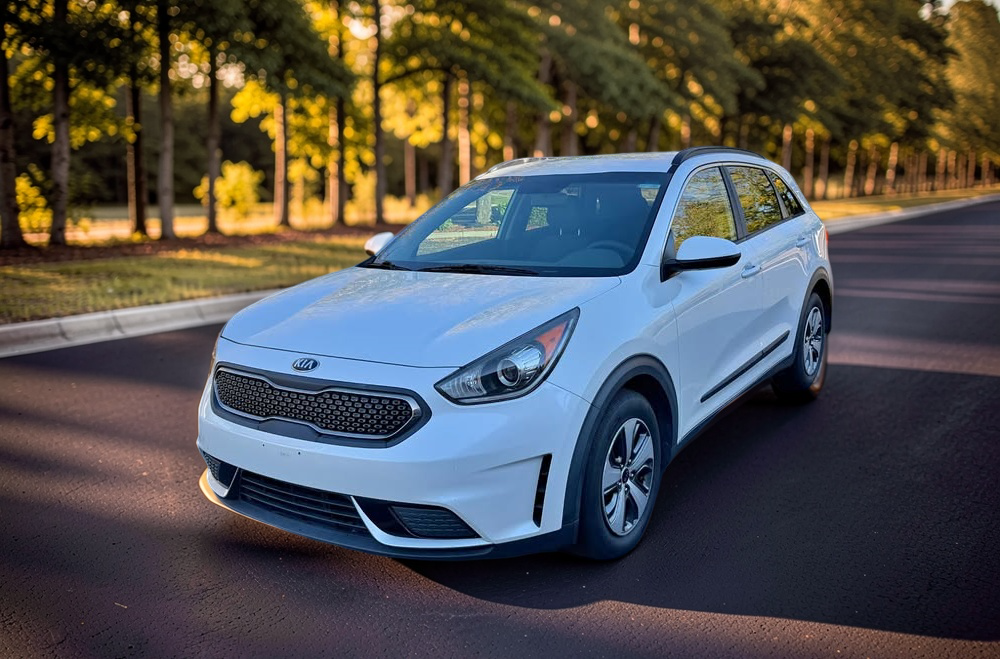
1. Which Kia Niro Years Deserve the Most Caution?
The 2017–2018 Hybrids Carry the Biggest Risks
The 2017 and 2018 Niro hybrids warrant extra scrutiny because certain vehicles face overlapping fire recalls, coolant-related service issues, and early engine concerns.
These records document specific risks, but they do not establish that every vehicle from those years is affected or that these are statistically the least reliable Niro years. Some 2018 vehicles may also fall within Kia’s dual-clutch transmission grinding bulletin.
Later years have fewer overlapping documented issues, but the powertrain matters. A 2020 hybrid has different potential weak points from a 2020 Niro EV. Treating them as one reliability group can obscure expensive faults.
| Model year | Hybrid and plug-in hybrid | Niro EV |
|---|---|---|
| 2017–2018 | Highest caution as an editorial risk ranking. Check whether applicable clutch-actuator and rear-seat power-relay recalls were completed. Some vehicles may also have cylinder-head, coolant, or DCT concerns. | Not sold in the U.S. |
| 2019 | Extra caution. Check for misfires, unexplained coolant loss, applicable clutch-actuator recall work, and DCT grinding. | First U.S. model year. Check for motor or reduction-gear rumble and applicable service history. |
| 2020 | Conditional buy. Verify applicable clutch-actuator recall completion and investigate coolant loss or engine symptoms. | Extra caution. Check the EPCU coolant-leak recall, drive-unit noise, and inverter-coolant service history. |
| 2021–2022 | Consider only after checking applicable recalls, coolant stability, engine condition, and shift quality. | Conditional buys. Check coolant service and drive-unit noise. For 2022 vehicles, verify the battery safety-plug recall by VIN. |
| 2023 | First redesigned year. Check the applicable shift-control bulletin, instrument-cluster recall, and passenger-seat wiring recall. | Check applicable driveshaft, differential, and passenger-seat wiring recalls. |
| 2024–2025 | Newer candidates, subject to VIN-specific recall/campaign checks and service history. | Newer candidates, subject to VIN-specific driveshaft and passenger-seat wiring recall checks where applicable. |
These rankings reflect documented defects and repair risks, not measured failure rates. Complaint totals and service-bulletin coverage do not account for sales volume, mileage, or time on the road.
A repaired 2018 hybrid may be a better purchase than a neglected 2022 model. The repair record must match the actual fault, though. A completed recall will not automatically fix unrelated coolant loss or transmission wear. Check recall status by VIN, and do not treat a service bulletin as proof that every vehicle in its model-year range has the problem.
Even the Newer Niro Models Have Unfinished Business
The 2024 and 2025 Niro models are newer starting points, but they are not free of documented campaigns and recalls.
Kia issued SC320 for certain 2024 hybrids and plug-in hybrids with EGR valve assemblies that may not meet specifications. The campaign calls for replacement on affected vehicles. It is a service campaign, not a safety recall, and does not mean that every 2024 vehicle is affected.
Kia’s SC358 campaign, announced in December 2025, addresses refrigerant charge on certain 2025 hybrids, plug-in hybrids, and EVs. The concern is insufficient cabin cooling. The campaign does not establish a widespread engine-failure pattern. For both campaigns, check the VIN and ask whether required work was completed.
Build dates and VIN records matter more than broad model-year claims. A Kia dealer can confirm campaign eligibility and completion by VIN.
The refreshed 2027 Niro hybrid and the 2026 models sit outside this used-car ranking. They have less comparable long-term service history than earlier model years, so a firm durability judgment would be premature.
2. Early Kia Niro Hybrids Face Two Separate Fire Risks
A Contaminated Clutch Actuator Can Start an Engine Bay Fire
Fluid contamination of the hydraulic clutch actuator’s circuit board can create an electrical short and an engine-compartment fire. The actuator controls clutch engagement between the gasoline engine and electric motor. Kia’s investigation found contamination but did not establish worn internal seals as its cause. Contamination alone does not prove that the actuator’s hydraulic seals have failed.
Kia addressed the risk through recall 23V534 / SC276. It covers certain 2017–2022 Niro hybrids and 2018–2022 plug-in hybrids. The hazard is a possible engine-compartment fire while driving. The recall applies to specified vehicles, not every Niro in those model years, so check the VIN.
Under SC276, dealers inspect the actuator and replace it when the inspection results require replacement. The remedy also includes a revised fuse. Kia performs the recall work free of charge. Consult the applicable Kia repair procedure for the exact inspection and parts requirements.
A completed SC276 repair does not necessarily mean the actuator was replaced. Some vehicles may have received the inspection and fuse change only. If a hybrid-system warning appears, follow the instructions for the specific dashboard message in the owner’s manual and contact Kia or a dealer for guidance. Do not drive when the message directs you to stop or not to drive; arrange a tow when Kia’s instructions call for one.
The Rear-Seat Power Relay Can Overheat Even After an Earlier Recall
Another fire risk sits beneath the rear passenger seat of certain Niro hybrids. The Power Relay Assembly (PRA) contains relays that control high-voltage power flow. Poor contact between relay terminals can increase electrical resistance and generate heat.
Recall 22V836 / SC256 covers certain 2017–2018 Niro hybrids built from November 1, 2016, through September 11, 2017. Kia identified 27,030 potentially affected U.S. vehicles.
The issue was not fully resolved for every vehicle by the earlier 18V666 / SC168 recall. Some vehicles recorded as repaired still had original main relays installed. Kia launched SC256 to address vehicles that may have missed the required relay replacement.
Dealers inspect the relay assembly for thermal damage and check which relays are installed. If thermal damage is found, technicians replace the assembly. If there is no thermal damage but the original relays remain, technicians replace them with updated Panasonic units.
Both repairs are free under the recalls. An old SC168 invoice alone does not prove the SC256 repair was completed. For an affected VIN, confirm the latest recall completion in Kia’s or NHTSA’s records.
3. Coolant Loss and Misfires Can Hide Three Different Faults
A Stuck Exhaust Valve Can Boil the Coolant
On some early Niro hybrids, overheating and coolant boiling can be caused by a bypass valve in the exhaust heat-recovery system (EHRS) stuck closed.
The EHRS heat exchanger uses hot exhaust gases to warm engine coolant more quickly. Once coolant exceeds 176°F (80°C), the bypass valve should open and divert exhaust gases around the exchanger.
If the valve stays closed, exhaust heat continues to enter the coolant. Temperature can rise, the reservoir may boil over, and coolant can escape. These symptoms need diagnosis; a dry driveway does not identify the failed component.
Kia documented this condition in PS709 for some 2017–2022 hybrids and 2018–2022 plug-in hybrids. Technicians check the wax actuator and bypass-valve movement. A stuck valve can cause overheating without a crack in the heat exchanger.
The repair depends on which part has failed. Kia’s diagnostic guidance also allows technicians to temporarily bypass the EHRS coolant circuit to help confirm the source of overheating. This is a diagnostic step, not a general permanent repair.
An EGR Cooler Leak Can Hide Behind Repeated Misfires
A different coolant fault can make the engine stumble while the reservoir slowly empties. On some Niro hybrids, the exhaust gas recirculation (EGR) cooler may develop an internal coolant leak.
Coolant entering the EGR passage can disrupt combustion and trigger random misfires. Possible symptoms include hesitation, falling coolant levels, or overheating without an obvious puddle.
Kia addressed this diagnostic pattern in PS730 for some 2017–2022 hybrids and 2018–2022 plug-in hybrids. The procedure first compares misfire activity with EGR operation. If the results point toward the cooler, technicians pressure-test the cooling system for 15–20 minutes. A pressure drop greater than 1 psi calls for further inspection.
Technicians then check the specified EGR-cooler area for evidence of coolant leakage. Kia calls for cooler replacement when leakage is found. If no leak appears, diagnosis must continue elsewhere. The bulletin describes a diagnostic procedure; it does not show how common the fault is across the listed model years.
Replacing spark plugs would not address a confirmed internal coolant leak. If overheating raises concern about engine damage or a possible head-gasket failure, the engine needs separate diagnosis. Kia’s bulletin directs technicians to contact Kia Techline before proceeding when engine damage is suspected.
Early Cylinder Heads Can Trigger Misfires Without Overheating
Some 2017–2019 Niro hybrids and plug-in hybrids may hesitate during light acceleration, often around 24–37 mph, while EGR is operating.
Kia documented the condition in ENG212, Revision 1. Affected vehicles may store P0300 for random or multiple-cylinder misfires. Codes P0301–P0304 identify misfires in cylinders 1 through 4.
When symptoms, diagnostic checks, and production-date criteria match, Kia’s procedure calls for cylinder-head replacement. This is a bulletin-guided repair for qualifying vehicles, not a finding that every 2017–2019 Niro has a defective head.
The bulletin’s vehicle production range ends on November 13, 2018. The existing cylinder head must have been manufactured on or before November 7, 2018. Both dates and the required diagnosis matter. This misfire condition may occur without the coolant loss associated with an EGR-cooler leak, so stable coolant levels alone do not rule it out.
4. Grinding Shifts Can Lead to Expensive Clutch Repairs
Some 2018–2019 Niros Grind When Shifting Into 3rd Gear
A brief grinding noise during deceleration can point to a clutch or transmission fault. The Niro hybrid and plug-in hybrid use a six-speed dual-clutch transmission (DCT), which uses separate clutches to manage gear changes.
Kia documented a specific grinding condition in TRA092 for certain vehicles built from August 10, 2018, through September 30, 2019.
The grinding occurs during the shift from 4th to 3rd gear as the vehicle slows through 19–25 mph. Kia says the condition may not appear on new vehicles and applies to vehicles with about 6,000 miles or more. That is a diagnostic qualifier, not an estimate of when the fault typically begins.
The repair depends on the clutch assembly’s production details and inspection results. Some vehicles require a replacement double-clutch set. Others need the complete transmission assembly replaced. Kia also specifies the applicable transmission-control logic optimization after hardware replacement.
Both repairs involve substantial labor. When the fault is confirmed, the bulletin calls for the specified hardware repair rather than a software update alone. A seller might dismiss grinding as normal hybrid behavior, but a Niro that grinds during the 4th-to-3rd downshift should be inspected and its repair history checked before purchase.
The 2023 Niro Can Lose 2nd Gear for a Different Reason
Some redesigned 2023 Niro hybrids and plug-in hybrids may develop poor shift quality or fail to engage 2nd gear. The transmission may store P074A73, which Kia describes as inability to engage gear 2.
Kia addressed this condition in TRA106 for certain vehicles built from June 14 through December 12, 2022. The bulletin identifies applicable hybrid and plug-in hybrid vehicles; it does not cover the Niro EV.
Kia’s repair procedure tightens the specified ground bolts for the clutch actuator and transmission control unit (TCU), then updates the transmission-control software. The bulletin specifies these repair steps but does not establish loose ground connections as the proven cause of every shifting complaint.
For an eligible used 2023 Niro, check the service record for both the ground-bolt work and the applicable software update. Confirm applicability by VIN and calibration information rather than relying on model year or build date alone.
5. Early Niro EVs Can Develop Costly Drive-Unit and Cooling Faults
A Repeated Rumble Can Point to Motor or Reduction-Gear Trouble
A repeated rumble from the front drivetrain can indicate a motor or reduction-gear concern on some Niro EVs. Kia’s bulletin describes abnormal rumbling during low-speed driving or acceleration and deceleration. It does not establish that the noise typically grows louder over time or that all 2019–2022 vehicles are affected.
Kia documented the condition in ELE234, Revision 1. The procedure first calls for specified updated mounting parts and a test drive. If the rumble remains, technicians inspect the motor and reduction gear to isolate the source.
Depending on the findings, the motor, reduction gear, or related mounting parts may need replacement. The bulletin calls for staged diagnosis, not automatic replacement of the complete drive unit. A repeated abnormal rumble should be inspected before purchase, with attention to any prior repair records.
A Full Coolant Reservoir Can Still Trigger a Warning
The dashboard may display “Refill inverter coolant” even when the reservoir appears full. On certain Niro EVs, poor coolant flow or debris in the cooling pipes can trigger this warning.
Kia addressed the condition through ELE270 / SA512, with Revision 3 dated March 3, 2025. The service action applies to certain 2019–2022 Niro EVs. Kia’s bulletin includes production-date information and requires VIN-list verification, so use the vehicle’s VIN rather than model year or a date range alone to establish eligibility.
The bulletin describes debris and poor flow involving the low-conductivity BSC-1 coolant circuit. The warning may appear even when coolant is visible in the reservoir and no diagnostic trouble code is stored.
Kia’s repair calls for flushing debris from the cooling circuit and replacing BSC-1 with revised BSC-2 coolant. Technicians must follow the specified flushing procedure and complete the prescribed refill and air-bleeding steps.
The bulletin excludes vehicles using general green coolant. Work outside warranty requires Kia approval under the service instructions. For an eligible used Niro EV, look for an invoice showing the SA512 flush and BSC-2 refill. Coolant color alone cannot prove that the service was completed.
6. Two Niro EV Recalls Can Cut Power Without Warning
A Coolant Leak Can Shut Down the 2020 Niro EV
On certain 2020 Niro EVs, coolant can leak inside the Electric Power Control Unit (EPCU). The vehicle may display a “Check Electric Vehicle System” warning and may lose drive power while moving.
Kia identified the fault under recall 22V899 / SC258. It covers 872 potentially involved U.S. vehicles built from June 18 through September 4, 2020. This is a limited, VIN-specific recall population, not every 2020 Niro EV or 872 confirmed failures.
The EPCU controls power flow through the electric drivetrain. Poor sealing can let coolant reach its internal circuit board, which can cause the warning or a stall and loss of drive power.
Kia requires dealers to inspect and test the EPCU for internal coolant leakage. If the test finds a leak, they replace the unit with an improved assembly at no charge.
This recall is separate from the SA512 coolant-flushing campaign. Flushing the cooling circuit will not repair a leaking EPCU housing. Kia’s recall report says the supplier corrected the sealing process, and Niro EVs built from September 5, 2020 received properly sealed EPCUs. Check recall status by VIN.
The 2022 Battery Safety Plug Can Overheat During Charging
A melting-plastic smell or smoke while driving or charging is a warning sign identified in the safety-plug recall. Certain 2022 Niro EVs contain a high-voltage battery safety plug that can overheat.
Recall 24V358 / SC314 covers 2,209 potentially involved U.S. vehicles built from July 21 through December 2, 2021. The recall population is not a count of confirmed defective plugs, and eligibility is VIN-specific.
High resistance at the plug’s electrical contacts can generate heat. During driving or charging, that heat can melt the plug and increase the risk of fire or lost drive power.
Drivers may notice an EV service warning light, melting-plastic odor, or smoke. Kia suspects a manufacturing deviation in the plug terminals, but the exact cause was not confirmed.
Dealers replace the high-voltage safety plug free of charge. The recall remedy replaces the plug assembly; it does not call for routine replacement of the entire traction battery.
Kia instructs owners of affected, unrepaired vehicles not to charge inside a garage or other covered structure until the recall repair is completed. Follow the recall notice’s safety instructions and verify the vehicle’s status by VIN.
7. Newer Niro EVs Have Two Small but Serious Drivetrain Recalls
A Broken Driveshaft or Loose Differential Bolts Can Stop the Car
A driveshaft can break under load and cause the Niro EV to lose drive power. A separate differential-bolt problem can damage the gear-drive unit or lock the differential while driving.
Kia identified these defects in two recalls affecting small numbers of certain 2023–2024 Niro EVs.
| Recall | Affected U.S. Niro EVs | Fault and required repair |
|---|---|---|
| 24V057 / SC295 | 204 vehicles from 2023–2024, built June 27–July 13, 2023 | An improperly heat-treated left driveshaft can break under load. Dealers replace the affected shaft. |
| 24V271 / SC308 | 4 vehicles from 2023, built November 7, 2022–May 16, 2023 | Differential bolts may not be properly torqued and can damage the gear-drive unit, cut power, or lock the differential. Dealers replace the gear-drive unit. |
The driveshaft defect can cause sudden loss of power without warning. If an affected driver notices the warning symptoms described in Kia’s recall notice, Kia advises pulling over safely and arranging a tow. The recall documents reviewed do not identify a separate rollaway risk from an unapplied parking brake.
The differential fault develops differently. Loose bolts can damage internal gears or the housing. Kia identifies grinding while driving as a possible warning before loss of power or differential lockup.
Both recalls require hardware replacement at no charge. The differential repair involves the complete gear-drive unit, while the driveshaft recall requires replacement of the affected shaft.
Build Dates Alone Won’t Confirm Recall Coverage
Kia’s affected vehicles were not produced in consecutive VIN order. Two Niro EVs built on the same day may therefore have different recall eligibility.
The dealer must match the vehicle identification number against Kia’s recall records. A general service history does not prove that an open recall has been repaired. Check both eligibility and completion status by VIN.
For SC295, Kia began fitting properly heat-treated driveshafts on July 14, 2023. Production corrections for SC308 began earlier, on May 17, 2023.
Those dates help narrow the search, but the VIN remains the deciding factor. Before purchase, confirm whether the vehicle is covered and whether the applicable driveshaft or gear-drive-unit recall repair has been completed.
8. Camera, Dashboard, and Airbag Faults Affect Several Niro Years
Some 2020–2022 Niro EVs Can Lose Their Backup Camera
On certain Niro EVs, an electrical surge can damage the rearview camera. When the driver shifts into Reverse, the screen may show no image behind the vehicle.
Kia addressed this under recall 25V426 / SC342. It covers certain 2020–2022 Niro EVs equipped with navigation and the 10.25-inch touchscreen. The affected vehicles were built from January 15, 2020, through March 29, 2022.
Kia’s repair replaces the original camera with an improved unit designed to withstand higher voltage surges. Dealers perform the recall work free of charge. Check eligibility and repair status by VIN.
A Software Fault Can Leave the 2023 Instrument Cluster Blank
A 2023 Niro may start normally while the instrument display stays dark. That can leave the driver without a speed reading or important warning indicators.
Kia identified this fault in recall 23V298 / SC270. It covers certain 2023 Niro hybrids and plug-in hybrids equipped with the 4.2-inch LCD instrument cluster. Affected vehicles were built from September 14, 2022, through March 8, 2023.
Voltage instability during startup can disrupt the cluster’s boot sequence and prevent the display from loading. The repair involves checking the cluster software and installing an update when required. Kia provides the update free of charge.
This recall concerns the instrument cluster’s startup behavior. It does not establish a widespread CAN-bus failure across the vehicle’s other electronic controls. Check recall eligibility by VIN.
Passenger-Seat Movement Can Damage Airbag Wiring
On certain redesigned Niros with a manual front passenger seat, repeated seat movement can cause the floor wiring harness to contact an under-seat bracket and become damaged. Kia attributed the condition to routing variation and repeated seat movement.
Recall 25V024 / SC332 covers certain 2023–2025 hybrids, plug-in hybrids, and EVs equipped with a manual front passenger seat. The described condition does not apply to vehicles with a power front passenger seat. Verify eligibility by VIN.
Damaged wiring can interfere with the Supplemental Restraint System (SRS). The front passenger airbag or seat-belt pretensioner may fail to deploy during a crash. The fault can also cause incorrect passenger-airbag suppression or unintended passenger-side airbag deployment.
Kia’s repair requires technicians to inspect the affected wiring. Damaged sections are replaced as needed, and the harness is rerouted and fitted with protective covers.
Factory wiring corrections began December 14, 2024, for EVs, December 17 for PHEVs, and December 18 for HEVs. A 2025 model-year badge does not guarantee corrected wiring. Verify SC332 applicability and completion by VIN.
9. Warranty Coverage Can Decide Who Pays for Major Niro Repairs
Hybrid Parts May Still Be Covered for Second Owners
Kia’s 10-year/100,000-mile warranty language can sound reassuring, but coverage depends on the failed part, the vehicle’s original in-service date and mileage, and the warranty terms.
The 2018 Niro warranty manual gives several hybrid-system parts 10-year/100,000-mile coverage. Listed parts include the hybrid battery, traction motor, starter-generator, power control unit, and automatic transmission/traction motor.
Remaining hybrid-system coverage transfers to later owners, subject to the original time and mileage limits and the manual’s terms. For qualifying California-emissions vehicles, the hybrid-system warranty is 10 years/150,000 miles, subject to the manual’s state exceptions, including Pennsylvania and Washington.
The standard Power Train warranty has different transfer rules. The 10-year/100,000-mile Power Train warranty generally applies only to the original owner; later buyers may retain other applicable transferable coverage, subject to its limits. Warranty approval also depends on the failure itself. A factory defect may qualify, while normal wear, neglected maintenance, and excluded damage generally will not.
Before approving a repair, Kia checks the original in-service date, mileage, failed part, and applicable warranty terms. A technical service bulletin does not automatically make a repair free.
The EV Battery Warranty Won’t Cover Every Drivetrain Repair
A noisy reduction gear can leave a used Niro EV buyer facing an unexpected repair bill. Kia separates electric-drive components into warranty categories, so check the exact model-year warranty booklet rather than assuming that the EV battery warranty covers every drivetrain part.
The 2023 Niro EV warranty lists the electric motor, high-voltage battery, Electric Power Control Unit (EPCU), and onboard charger under its 10-year/100,000-mile EV System warranty. Verify the Gear Drive Unit’s exact warranty category and transfer rules in the 2023 Niro EV warranty booklet before relying on coverage.
Battery capacity has another limit. Kia’s EV battery warranty addresses capacity loss below 70% within the applicable 10-year/100,000-mile period, subject to the warranty terms. An approved repair or replacement must restore capacity to at least 70% of its original level. Kia does not promise to restore the battery to full factory capacity.
Check the exact model-year warranty booklet before buying. For battery degradation, 70% remaining capacity is the stated threshold, subject to the applicable terms, measurement, and exclusions.
Sources & References
- NHTSA Recall Records: 2017 Kia Niro
- NHTSA Recall Records: 2018 Kia Niro
- SC320 Kia Dealer Circular
- SC358 Kia Dealer Circular
- Upcoming 2027 Kia Niro: Refreshed Hybrid Crossover
- 2026 Kia Niro EV Overview
- Part 573 Safety Recall Report 23V-534: Hydraulic Clutch Actuator
- Kia Hydraulic Clutch Actuator Recall Chronology
- SC276 Interim Dealer Notice
- 2022 Niro PHEV Owner’s Manual: Warning and Indicator Lights
- Part 573 Safety Recall Report 22V-836: Power Relay Assembly
- SC256 Power Relay Assembly Inspection and Replacement
- SC168 Power Relay Assembly or Main Relay Replacement
- Kia PS709: Engine Overheating in Niro HEV/PHEV
- Kia PS730: Random Misfires or Overheating Due to Low Coolant
- Kia ENG212 Revision 1: Cylinder Head Replacement for Lean Misfire
- Kia TRA092: 6-Speed DCT Replacement
- Kia TRA106: DCT Judgement Logic and Ground Bolt Tightening
- Kia ELE234 Revision 1: Drive Unit Inspection and Replacement for Motor Rumble
- Kia ELE270 Revision 3 and SA512: Inverter Coolant and Debris Flushing
- Part 573 Safety Recall Report 22V-899: EPCU Coolant Leak
- Kia SC258 EPCU Leak Inspection and Replacement
- Part 573 Safety Recall Report 24V-358: High-Voltage Battery Safety Plug
- Kia SC314 Owner Notification
- Part 573 Safety Recall Report 24V-057: Niro EV Driveshaft
- Kia SC295 Owner Notification
- Part 573 Safety Recall Report 24V-271: Niro EV Gear-Drive Unit
- Kia SC308 Owner Notification
- NHTSA VIN Recall Lookup
- Part 573 Safety Recall Report 25V426: Niro EV Rearview Camera
- Part 573 Safety Recall Report 23V-298: Instrument Cluster
- Part 573 Safety Recall Report 25V-024: Niro Floor Wiring
- Kia Floor Wiring Recall Chronology for 2023–2025 Niro Models
- 2018 Kia Niro Hybrid and Plug-in Hybrid Warranty Manual
- Kia Warranty Information
- 2023 Kia Niro Brochure