
A sharp engine knock cuts through highway noise, then the Kia Soul starts losing power. In certain 2012–2016 models, an overheating catalytic converter can damage pistons and break connecting rods. One bad failure can destroy the engine and leave a repair bill worth more than the car.
The trouble runs deeper. Some 2020–2023 Souls face piston-ring defects that can lead to oil loss, engine seizure, and fire. Early IVT transmission faults, steering recalls, and theft risks make the wrong used Soul an expensive mistake.
This guide breaks down the years with the worst problems, the engines and transmissions behind them, and the recalls that matter. It also covers repair costs, warranty limits, and which Kia Soul models deserve a closer look.
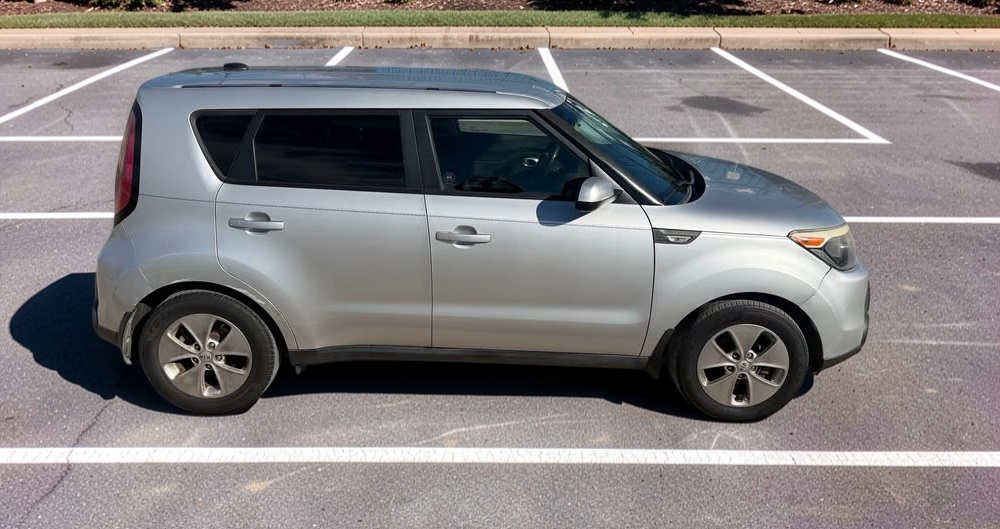
1. Kia Soul Years That Carry the Biggest Repair Risks
The Worst Years Depend on What’s Under the Hood
The 2014–2016 Souls deserve close scrutiny, followed by certain 2012–2013 and 2020–2023 models. Engine damage, oil consumption and transmission concerns drive much of that caution. Some repairs can cost more than an older Soul is worth.
The risk depends on the engine, equipment, build date and VIN. The 2012 Soul offered a 1.6-liter GDI engine or a 2.0-liter MPI engine. Later models added 2.0-liter GDI and turbocharged options. A model-year label alone does not establish whether a recall or service campaign applies.
The table below is a used-car screening guide, not a measured ranking of failure rates.
| Model years | Engine or equipment | Buying considerations |
|---|---|---|
| 2010–2011 | Early 1.6-liter and 2.0-liter engines | Older budget options. Verify timing-belt service for the 2.0-liter and inspect for age-related wear and corrosion. Confirm the correct market-specific maintenance interval. |
| 2012–2013 | 1.6-liter GDI, 2.0-liter MPI | Check the VIN and repair history carefully for the 1.6-liter GDI catalytic-converter campaign. Assess the 2.0-liter separately. |
| 2014–2016 | 1.6-liter GDI, 2.0-liter GDI | Higher scrutiny is warranted for engine campaigns, bearing-related coverage and steering recalls. Confirm what work was actually performed. |
| 2017–2019 | 1.6-liter GDI, 2.0-liter GDI, 1.6-liter turbo | Check engine and settlement eligibility by VIN. Turbo versions use a dual-clutch transmission and may need diagnosis for takeoff judder. |
| 2020–2021 | 2.0-liter MPI and turbo configurations | Certain 2.0-liter engines are in piston-ring recalls, and certain IVT-equipped vehicles are covered by SC199. A 2020 LX manual and turbo DCT are exceptions to a blanket IVT description. |
| 2022–2023 | Certain 2.0-liter MPI and IVT-equipped vehicles | Some vehicles fall within piston-ring, transmission-pump, airbag or other campaign groups. Check each VIN and campaign history. |
| 2024–2025 | 2.0-liter MPI with IVT | These model years are outside the identified piston-ring recall production groups discussed here, but that does not exclude other recalls or establish long-term reliability. |
Treat these tiers as screening priorities, not measured failure-rate rankings. NHTSA complaint counts are reports, not failure rates. Vehicle population, mileage, reporting habits, recalls and other evidence affect how complaint totals should be interpreted.
Why a Clean VIN Can Still Hide Engine Trouble
A clean NHTSA recall search is not a complete repair history. Its VIN lookup generally shows unrepaired safety recalls, not completed repairs, and manufacturer service campaigns may be listed separately. Some recalls older than 15 years may also fall outside the standard lookup results.
Kia’s dealer records can show which campaigns were performed. That matters for SC176, SC209 and SC336, which address different engine defects. A campaign-completion entry alone may not show whether the work involved software, a catalytic converter or engine replacement.
Ask for the repair orders. They should identify the diagnosis, parts, work performed and mileage. A completed software update does not prove that previously damaged engine hardware was replaced.
2. How the 2012–2016 Kia Soul 1.6 GDI Can Damage Its Engine
When a Failing Catalytic Converter Starts Damaging Pistons
Certain 2012–2016 Soul models with the 1.6-liter GDI engine were recalled for a catalytic-converter-related engine-damage risk. Kia said excessive exhaust temperatures can damage the converter substrate. Particles may enter the combustion chamber, cause abnormal combustion, damage pistons and break a connecting rod.
Kia addressed the defect under recall 19V120 / SC176. The U.S. recall covered 378,967 VIN-eligible vehicles built from July 8, 2011, through August 11, 2016. If a connecting rod breaks, it can puncture the engine block, allowing oil to escape and potentially contact a hot exhaust surface. That can increase fire risk.
Kia identified engine knocking and an illuminated malfunction-indicator lamp as possible warnings. A P0420 code indicates catalyst efficiency below threshold, but does not by itself prove internal engine damage. Converter trouble can occur without piston damage.
SC176 upgraded the ECU’s Catalytic Overheating Protection software. Depending on the inspection results, Kia also replaced a damaged catalytic converter or the engine short block. A software update alone cannot repair existing physical damage.
Kia’s SC176Y Follow-Up Can Cover More Than the Converter
Kia issued the SC176Y subsequent-repair bulletin in October 2024 and revised it on March 23, 2026. The procedure applies only to eligible VINs that previously completed SC176 and have P0420 stored as active, pending or history. P0300–P0304 misfire codes affect the diagnostic path.
If an active P030X code accompanies P0420, Kia calls for a compression test. The specified standard is 178 psi and the minimum is 149 psi. Technicians test every cylinder twice and record both peak readings. If any cylinder is below the minimum, Kia directs replacement of the engine sub-assembly. If all cylinders meet or exceed the minimum, the procedure directs catalytic-converter replacement. If P030X is absent or only pending or stored in history, the procedure also directs converter replacement.
Qualifying SC176Y repairs are performed at no charge, but a VIN must qualify and P0420 must be stored before the action is opened. Kia also requires VIN verification, a Vehicle Diagnosis Number before parts ordering or repair, and an Validation Form. A generic converter failure without qualifying P0420 does not establish SC176Y eligibility.
3. Why the 2.0 GDI Can Turn an Oil Problem Into Engine Failure
The 2014–2015 Engine Recall Goes Deeper Than Oil Leaks
Certain 2014–2015 Kia Souls with the 2.0-liter Nu GDI engine are covered by recall 20V750 / SC200. The eligible U.S. vehicles were built from July 21, 2013, through May 21, 2015. The recall does not cover the 2013 model year.
Kia described the campaign as a preventive measure for possible fuel or oil leaks and/or engine damage. The cause of reported fires had not been determined. Dealers inspect for leaks, perform a Bearing Clearance Test (BCT) to assess connecting-rod bearing clearance, and check or update Knock Sensor Detection System (KSDS) software. Under the SC200 procedure, a failed BCT is referred to Kia Techline for further instructions; engine replacement depends on the applicable diagnosis and repair procedure.
Connecting-rod bearing wear can produce engine knock. Kia’s KSDS is designed to detect vibration associated with excessive bearing wear before severe engine damage, including engine failure. A suspected bearing problem needs prompt dealer diagnosis.
Oil consumption is a separate issue to evaluate. Kia’s ENG222 procedure covers excessive-oil-consumption diagnosis for 2014–2019 Soul models with the Nu 2.0-liter GDI engine. It uses a 1,000-mile test and classifies consumption above one quart per 1,000 miles as excessive under that procedure. A full dipstick during a test drive cannot establish long-term oil use. Review service records, measured consumption, dealer findings and any engine repairs.
Kia’s 15-Year Engine Warranty Comes With Strict Limits
A U.S. class-action settlement extended engine coverage for certain Kia Souls with connecting-rod bearing defects. Eligible vehicles include 2012–2016 Souls with the 1.6-liter GDI engine and 2014–2019 Souls with the 2.0-liter GDI engine. Qualifying short-block or long-block damage caused by connecting-rod bearing failure may be covered for 15 years or 150,000 miles from the original retail delivery date, whichever comes first.
The coverage can transfer to subsequent owners for personal use. Kia generally requires the KSDS update before a qualifying failure. The settlement waives that prerequisite for extended-warranty coverage on vehicles subject to recalls 20V750 or 21V844. Other settlement benefits may have separate KSDS requirements.
KSDS monitors engine vibrations associated with bearing wear. If it detects a suspected fault, it can trigger code P1326 and a flashing check-engine light. The vehicle may enter a reduced-power mode. The warning calls for dealer diagnosis even if the engine still runs.
Oil consumption alone and unrelated engine faults do not qualify for the bearing-failure warranty. The settlement also defines an Exceptional Neglect exclusion using specified engine-condition evidence and oil-change gaps. Check the settlement terms and keep maintenance records.
For a used Soul, confirm eligibility with Kia using the VIN. The 15-year and 150,000-mile limits run from original retail delivery, not the used buyer’s purchase date. Ask Kia to verify KSDS and campaign history, and review records for maintenance and any engine replacement. A completed campaign or a prior replacement alone does not guarantee coverage.
4. Kia Soul Piston-Ring Recalls That Reach Into 2023
Two Piston-Ring Defects Can Damage the 2.0 MPI Engine
Certain 2020–2023 Kia Souls with the 2.0-liter Nu MPI engine were recalled for piston oil-ring defects. The two recalls cover different production groups. The 2021 model year appears in both, so VIN checks are essential.
| Recall | Affected Soul models | Production dates | Defect |
|---|---|---|---|
| 21V259 / SC209 | Certain 2020–2021 models with 2.0-liter Nu MPI | November 24, 2018–October 24, 2020 | Excessively hard oil rings can chip and scuff cylinder bores. |
| 25V099 / SC336 | Certain 2021–2023 models with 2.0-liter Nu MPI | July 2, 2020–April 19, 2022 | A piston-oil-ring supplier quality deviation can damage cylinder walls and increase oil consumption. |
Under SC209, inconsistent heat treatment made some rings excessively hard, allowing ring edges to chip and scrape cylinder bores. SC336 concerns a separate ring-manufacturing quality issue. Both defects can damage cylinder surfaces and increase oil consumption.
Kia’s recall filings identify abnormal engine noise and an oil-pressure warning as possible signs. Continued operation can cause engine damage or seizure and loss of motive power. Kia identifies fire as a limited possibility if a connecting rod punctures the block and leaking oil reaches a hot exhaust component.
The Software Update Warns About Damage but Leaves the Rings in Place
Kia’s SC336 procedure starts with an engine-vibration inspection. A passing result leads to installation of Piston-ring Noise Sensing System (PNSS) software. A failed inspection leads to long-block replacement, followed by software installation.
PNSS monitors unusual engine-noise patterns and can trigger P1327, identified as Piston Noise Detection. This differs from P1326, the bearing-related code associated with KSDS. PNSS software can provide an early warning, but it does not replace piston rings or repair cylinder damage. An engine that passes inspection can keep its original rings, and passing the test does not prove that no future problem can develop.
NHTSA Closed the Audit; SC336YZ Provides a Conditional Subsequent-Repair Path
NHTSA opened audit AQ25001 on August 6, 2025, after complaints about the SC336 remedy. The agency’s closing record describes Kia’s change from cold-engine to warm-engine testing, a diagnostic software error that produced false positives, and a remedy pause from April 30 to May 7, 2025.
NHTSA closed the audit on December 18, 2025, without requiring further manufacturer action after reviewing Kia’s response. The agency reserved the right to act later. The closure did not establish that every repaired engine would remain trouble-free.
In September 2025, Kia issued SC336YZ for eligible vehicles that completed SC336. If PNSS is installed and P1327 is present, Kia’s stated remedy is engine replacement at no charge and without a time or mileage limit. Other or unclear failures require diagnosis and, where applicable, Kia technical review. This is a conditional subsequent-repair path, not automatic coverage for every later engine problem.
5. Two Kia Soul Transmissions That Can Slip, Shudder, or Lose Drive
The 2020–2021 IVT Can Delay Acceleration
Kia’s Intelligent Variable Transmission (IVT) was offered on non-turbo automatic Souls. The 2020 LX also offered a six-speed manual, while the 1.6-liter turbo used a seven-speed dual-clutch transmission. Certain 2020–2021 IVT-equipped Souls are covered by SC199, a voluntary emissions service campaign addressing possible lack or delay of acceleration associated with transmission slippage.
SC199 covers certain vehicles built from November 24, 2018, through April 17, 2020. The affected VIN list, not the date range alone, determines eligibility. Kia identifies these diagnostic trouble codes in the procedure:
- P0730: Incorrect Gear Ratio.
- P0731: Gear 1 Incorrect Ratio.
- P0741: Torque Converter Clutch Circuit Performance or Stuck Off.
- P0867: Transmission fluid pressure.
A code identifies a detected condition; it does not by itself prove a specific internal failure. Kia describes the campaign symptom as lack or delay of acceleration due to slippage. A road-test symptom alone does not establish campaign eligibility.
Under SC199, a listed stored code calls for IVT replacement plus a transmission-control software update. Without the listed codes, the procedure calls for a software update and adaptive-values reset and relearning. After replacement, the procedure also requires oil-pressure-characteristics input, adaptive learning and KDS verification. A P160300 that remains after the prescribed learning procedure is another replacement trigger.
A completed software campaign does not prove the IVT was replaced. Check the repair order for the diagnosis and work performed. Persistent slipping or delayed acceleration after the update calls for further diagnosis.
The Turbo’s 7-Speed DCT Can Shake During Takeoff
The U.S. 1.6-liter turbocharged Soul uses a seven-speed dry-clutch dual-clutch transmission (DCT). Some vehicles can develop clutch judder during gentle takeoff, which may feel like the body shaking as the clutch engages.
Kia addressed the condition under TRA083, a technical service bulletin for certain Soul Turbo production ranges. It lists certain second-generation Soul Turbo models built from August 8 to October 27, 2016, and certain third-generation models built through April 2, 2020. Kia’s bulletin gives conflicting third-generation start dates: November 24, 2018, in one table and November 15, 2018, in another. Eligibility should be confirmed by VIN and Kia’s campaign records.
TRA083 uses a KDS clutch-judder measurement during a low-speed creep test. The procedure describes movement up to 3 mph and also refers to a test below 5 mph. Technicians repeat the measurement five times. Body vibration without steering-wheel shudder is the relevant condition.
A KDS result of “DC Inspection required” directs technicians to replace the double-clutch set, not necessarily the complete transmission. The procedure also requires DCT learning and a transmission-control logic optimization. A U.S. 2022 Soul Turbo is outside TRA083’s listed production range, but persistent takeoff shudder still deserves diagnosis.
6. Kia Soul Steering Problems That Range From Clunks to Lost Control
The 2012–2013 Steering Clunk Starts With a Worn Coupling
A clicking or other noise while turning can point to premature wear of the flexible coupling inside the Motor-Driven Power Steering (MDPS) assembly. Kia says the noise may occur while turning left or right, especially when the vehicle is stopped. Have the condition diagnosed rather than assuming the coupling is the cause.
Kia addressed premature coupling wear under warranty extension WTY013 for 2012–2013 Souls. It extended coverage from five years or 60,000 miles to 10 years with unlimited mileage, measured from the first service by the original owner. Kia covered diagnosis and coupling replacement when premature wear was confirmed.
As of November 7, 2026, the extension has expired for most affected vehicles, but the original service date and VIN-specific coverage determine an individual vehicle’s status. One third-party estimator lists about $508 to $697 for shop or dealer replacement on Soul examples. That is not a Kia quote or a national average. Request a local written estimate.
The 2014–2016 Pinion Recall Can Mean Loss of Steering
Certain 2014–2016 Souls and Soul EVs face a steering-gear defect. A pinion plug can loosen, allowing the pinion gear to separate from the steering gear assembly. If steering is lost, crash risk increases.
Kia and NHTSA addressed the condition through recalls 14V332 / SC108 and 15V736 / SC125. Kia later issued 17V608 / SC155 as a follow-up because some earlier repairs may not have been performed correctly. SC155 covers certain vehicles built from July 21, 2013, through September 30, 2015. Dealers verify the earlier work, redo the repair using the improved method or replace the steering gear when required.
SC155 uses different procedures by production date. For vehicles built from July 21, 2013, through January 17, 2014, the procedure calls for torquing the pinion plug and installing a new set screw. For vehicles built from January 18, 2014, through September 30, 2015, dealers inspect intermediate-shaft movement and prior set-screw work before completing the directed repair. Gear replacement is required in specified cases, including pinion separation, an unsecured plug or physical gear damage.
SC155 is a follow-up campaign, not simply proof that an earlier repair was completed. An old receipt alone does not establish SC155 completion. Check Kia’s campaign history for the VIN.
7. Kia Soul Fire and Airbag Recalls That Can Make a Clean Car Unsafe
Four Recalls That Can Put Drivers and Passengers at Risk
Kia safety recalls extend beyond engine and steering issues. The following U.S. recalls apply only to specified vehicles. Check the VIN for applicability and completion.
| Affected Soul group | Recall | Defect and remedy |
|---|---|---|
| Certain 2011–2013 models with ESC | 23V652 / SC284 | An HECU short can cause excessive current and an engine-compartment fire while driving or parked. SC284AM replaces the multi-fuse and updates its label. |
| Certain 2017–2019 Soul and Soul EV models | 22V031 / SC226 | ACU solder-joint damage can interrupt airbag control. Depending on the warning and diagnostic result, Kia updates software or replaces the control unit. |
| Certain 2023 Souls with IVT | 23V531 / SC275 | The transmission’s Idle Stop & Go electric-oil-pump controller can short and overheat. Kia’s remedy replaces the controller; NHTSA’s filing specifies inspection and replacement if necessary. |
| Certain 2023 Souls | 23V830 / SC289 | A curtain-airbag defect can cause unintended deployment. Dealers inspect both modules and replace affected units. |
The HECU controls the anti-lock braking system. NHTSA says the short-related fire risk can occur while driving or parked, but the recall filing does not specify that the ignition must be off. Possible warnings include ABS or malfunction-indicator lights, a burning or melting smell, and smoke from the engine compartment.
The SC226 airbag recall concerns damage to solder joints inside the Airbag Control Unit (ACU). If the airbag warning light is illuminated and code B1620 is present, Kia calls for ACU replacement. Vehicles without the warning receive a software update.
Why Two 2023 Souls Can Have Different Fire Risks
Production dates help distinguish campaigns, but VIN eligibility is what matters. SC275 covers certain 2023 Souls with IVT built from November 9, 2022, through May 10, 2023. A damaged capacitor in the Idle Stop & Go transmission electric-oil-pump controller can short and cause thermal damage to the circuit board, connector or wiring. Possible warnings include multiple dashboard lights, inoperative Idle Stop & Go, limp-home mode, inability to turn off the engine or smoke from the engine compartment.
The electric pump serves the transmission, not the engine. SC336 covers certain 2021–2023 2.0-liter Nu MPI Souls built from July 2, 2020, through April 19, 2022. That production window ends before SC275’s begins, but the model-year badge alone does not establish whether either recall applies.
SC289 covers certain 2023 Souls built from April 5 through April 28, 2023, for possible unintended curtain-airbag deployment. Dealers inspect both curtain-airbag modules and replace affected units. SC275 and SC289 production windows overlap, so do not assume their affected populations are mutually exclusive.
Kia performs eligible safety-recall repairs without charge. Until SC275 is completed, Kia instructs owners of affected vehicles to park outside and away from structures.
8. Kia Soul Theft Risks That Can Turn a Cheap Car Into an Insurance Headache
Even Some 2022 Souls Left the Factory Without an Immobilizer
Certain Kia Soul models with traditional key ignitions lack a factory engine immobilizer. A thief may damage the ignition lock and turn the exposed switch without the correct key.
Kia’s U.S. 2022 equipment chart lists the LX without an immobilizer and the S, X-Line, GT-Line, EX and Turbo trims with one. Trim and model year do not by themselves establish anti-theft campaign eligibility.
Kia’s CS2306 campaign covers certain 2020–2022 Souls built from November 24, 2018, through December 11, 2021. It updates the Body Control Module or Integrated Body Control Unit with added anti-theft start logic. Kia says the software protection is activated when the vehicle is locked with the key fob. Check the 17-digit VIN with Kia.
Insurance availability and prices vary. Regulators have reported cases in some states of insurers refusing, restricting or repricing coverage for theft-vulnerable Kia models. Before buying, request a quote using the actual VIN, inspect the ignition housing for prior damage and confirm Kia’s campaign history.
Kia’s New Hardware Offer Has a March 2027 Deadline
Under CS2311, Kia offered a permanently affixed ignition-cylinder protector to certain non-immobilizer vehicles that could not receive the anti-theft software update. For Soul SK3 vehicles, the bulletin lists production from December 27, 2018, through April 19, 2021, subject to VIN eligibility.
CS2312 offered a zinc-reinforced protector to certain non-immobilizer vehicles that had received Kia’s software update. The protector is an added barrier at the ignition cylinder. It is intended to prevent removal of the lock cylinder and access to the ignition tumbler. It does not make the vehicle theft-proof or prevent unrelated break-in damage.
Kia’s owner notice says eligible owners should have the no-cost protector installed by March 31, 2027. If an authorized dealer cannot or will not schedule installation by that date, contact Kia Customer Care at 800-333-4542 before the deadline. The notice says the owner may then remain eligible for no-cost installation beyond the initial period. Confirm eligibility by VIN. The available notice copy does not verify a January 2026 issue date.
9. Which Kia Soul Years Are Worth Buying Instead?
The 2010–2011 Soul Can Be Cheap, but Age Brings Its Own Repairs
The 2010–2011 Soul’s older engine options predate the production groups in the catalytic-converter and piston-ring recalls discussed above. The distinction is not simply MPI versus GDI: recall eligibility depends on the particular engine and production group. The 2.0-liter Beta engine has a cast-iron block and timing belt.
Confirm the correct market-specific maintenance schedule before quoting a timing-belt interval. The 2011 manual copy reviewed for this article lists a 2.0-liter belt replacement at 160,000 kilometers, about 100,000 miles, but does not establish a U.S. 10-year interval. If service history is unknown, verify the belt replacement before relying on the vehicle.
Age-related checks also matter. Inspect cooling hoses, seals, suspension bushings, brake lines and underbody corrosion, especially around structural mounting points. Rust risk depends on climate and road-salt exposure. Look for coolant leaks or signs of overheating.
A 2010–2011 Soul may work as a low-cost commuter, but maintenance records matter more than appearance or a low odometer reading. Treat an undocumented timing belt as unverified until service is confirmed.
The 2024–2025 Soul Offers a Cleaner Starting Point
The 2024–2025 Soul is outside the identified SC209 and SC336 piston-ring production groups and the SC199 IVT campaign cohort. That means fewer of those specific campaign concerns to investigate, not that every vehicle is free of recalls or that long-term durability is established.
For 2025, Kia lists every U.S. Soul trim with a 2.0-liter MPI engine rated at 147 horsepower at 6,200 rpm and 132 lb-ft of torque at 4,500 rpm, paired with an IVT. Kia lists an engine immobilizer as standard, including on the LX.
Road-test the vehicle and review its service and transmission records. Delayed acceleration, unusual engine-speed behavior or vibration merits diagnosis, but does not by itself prove a defect. These newer vehicles have less high-mileage history than older Souls.
Kia announced on October 6, 2025, that the Soul would retire at the conclusion of the 2025 model year, with production expected to end that October. No 2026 U.S. Soul model year followed, although remaining 2025 inventory could still be sold in 2026.
The 2025 Soul’s Crash Ratings Have Limits
The 2025 Soul carries an IIHS Good small-overlap front rating based on tests of a 2020 Soul S. Both driver-side and passenger-side ratings apply to 2020–2025 models. Child-seat-anchor (LATCH) ease of use earned an Acceptable rating. Rear outboard seats have lower anchors, while the center seat has a tether anchor without dedicated lower anchors.
Kia lists lane-departure warning and lane-keeping assistance as standard on the 2025 Soul. Blind-spot detection and rear automatic braking depend on trim or equipment, so check the actual vehicle.
The IIHS page lists no results for the updated moderate-overlap front or updated side-impact tests. Those missing ratings don’t indicate poor performance, but they leave the Soul’s results under the newer test standards unknown.
Sources & References
- Kia U.S. 2012 Soul Specifications
- Kia U.S. 2014 Soul Specifications
- Kia U.S. 2017 Soul Specifications
- Kia U.S. 2020 Soul Specifications
- Kia U.S. 2023 Soul Specifications
- NHTSA Datasets and APIs
- NHTSA Recall Lookup
- Kia SC176 Recall Bulletin
- Kia SC176 Campaign Questions and Answers
- NHTSA Recall Quarterly Report for 19V-120
- Kia SC176Y Subsequent-Repair Bulletin, Revision 1
- NHTSA Part 573 Safety Recall Report 20V-750
- Kia SC200 Safety Recall Campaign Bulletin
- Kia KSDS ECU Upgrade Bulletin PI2002B
- Kia ENG222 Excessive Oil Consumption Bulletin
- Kia Engine Class Settlement FAQ
- Kia Engine Class Settlement Agreement
- Kia Engine Class Settlement Final Approval Order
- NHTSA Part 573 Safety Recall Report 21V-259 / SC209
- NHTSA Part 573 Safety Recall Report 25V-099 / SC336
- Kia SC336 Safety Recall Campaign Bulletin
- NHTSA AQ25001 Close Resume
- Kia SC336YZ Subsequent-Repair Bulletin
- Kia SC199 IVT Campaign Bulletin, Revision 4
- Kia SC199 Owner Renotification
- Kia TRA083 Dual-Clutch Judder Bulletin, Revision 1
- Kia TRA083 Original Bulletin
- Kia U.S. 2022 Soul Specifications
- Kia WTY013 FAQ
- Kia WTY013 Owner Letter
- YourMechanic Kia Soul Flex-Coupling Repair Estimate
- NHTSA Steering Recall Notice 14V-332 / Kia SC108
- Kia SC125 Steering Recall Bulletin
- NHTSA Part 573 Safety Recall Report 17V-608 / Kia SC155
- Kia SC155 Steering Repair Bulletin, Revision 1
- Kia SC155 Owner Questions and Answers
- NHTSA Part 573 Safety Recall Report 23V-652 / SC284
- Kia SC284AM HECU Multi-Fuse Replacement Bulletin
- NHTSA Part 573 Safety Recall Report 22V-031 / SC226
- Kia SC226 Owner Recall Notice
- NHTSA Part 573 Safety Recall Report 23V-531 / SC275
- Kia SC275 Campaign Questions and Answers
- NHTSA Part 573 Safety Recall Report 23V-830 / SC289
- Kia SC289 Owner Recall Notice
- Kia U.S. 2022 Soul Features and Options
- Kia CS2306 Anti-Theft Software Campaign Bulletin
- Kia Anti-Theft Support and VIN Lookup
- District of Columbia Insurance Regulator: Kia Theft-Related Coverage Information
- Kia CS2311 Ignition-Cylinder Protector Bulletin
- Kia CS2312 Ignition-Cylinder Protector Bulletin
- Kia CS2312 Owner Notification Copy
- Kia U.S. 2011 Soul Announcement
- Kia U.S. 2012 Soul Announcement
- 2011 Kia Soul Owner’s Manual Maintenance Schedule Copy
- Kia U.S. Owner’s Manuals Portal
- Kia U.S. 2024 Soul Specifications
- Kia U.S. 2025 Soul Specifications
- Kia U.S. 2025 Soul Features and Options
- Kia America Soul Retirement Announcement
- IIHS 2025 Kia Soul Ratings